








A water-cooled screw chiller is a cooling system. It uses water and a screw compressor. This helps lower temperatures in buildings and factories. The system moves heat away from equipment or air. This keeps spaces and processes cool. Shenzhen Haoyi Refrigeration Technology Co., Ltd. makes these chillers. They offer high efficiency and smart controls.
-
The global market for screw water chillers was about USD 4.5 billion in 2023. It may grow to USD 7.2 billion by 2032.
-
Many industries pick water-cooled screw chillers. They want reliable and energy-saving cooling.
|
Water-Cooled Chiller |
|
|---|---|
|
Higher Efficiency |
Saves energy and lowers costs |
|
Greater Capacity |
Cools large areas and equipment |
|
Longer Lifespan |
Works reliably for many years |
Key Takeaways
-
Water-cooled screw chillers are strong cooling machines. They use water and a screw compressor to make things cooler in big buildings and factories. These chillers help save energy and money. This makes them a good choice for companies that need steady cooling. Smart controls in these chillers help people watch them in real time. They also help fix problems before they get worse. This makes the chillers work better. The modular design means you can add more parts easily. This helps businesses change how much cooling they need. Regular maintenance is very important for these chillers. People should check them every three months. This keeps them working well and helps them last longer.
Water-Cooled Screw Chiller Overview
What Is a Water-Cooled Screw Chiller
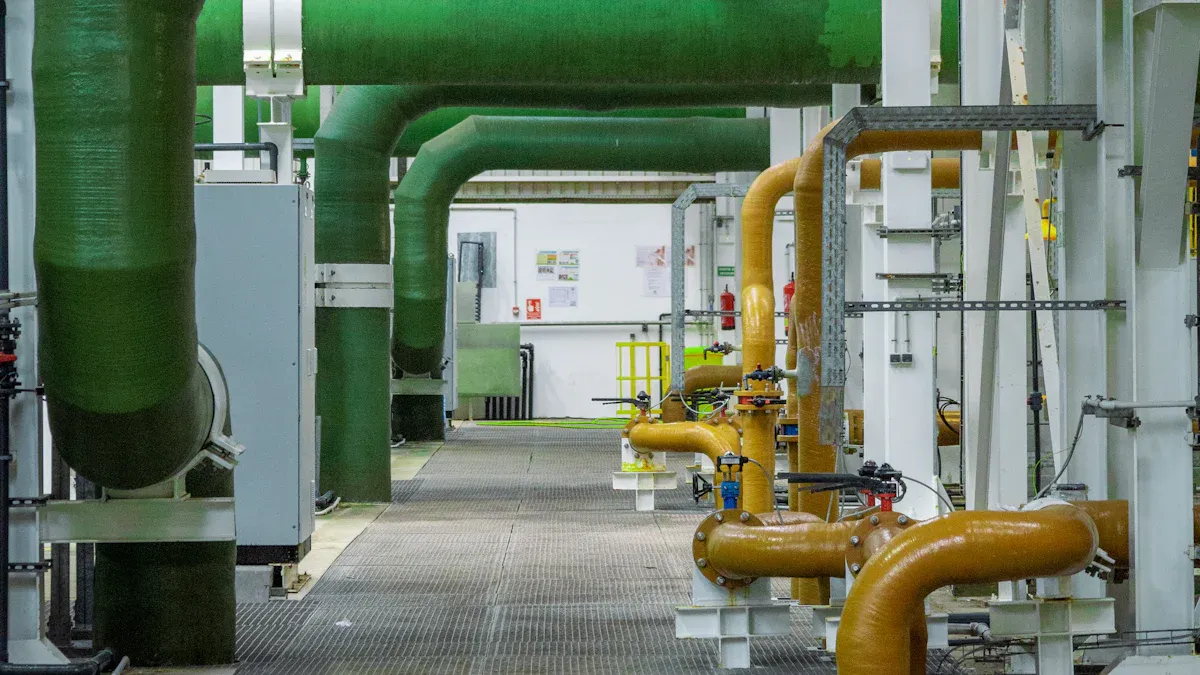
A water-cooled screw chiller is a system that cools things down. It uses a screw compressor and water to do this job. The system squeezes refrigerant and gets rid of heat with a cooling tower. It makes cold water for air conditioning or for cooling machines in factories. Shenzhen Haoyi Refrigeration Technology Co., Ltd. is a top company for these chillers. Their chillers work well and use new technology.
This chiller uses water that comes from a pump. The screw compressor helps the chiller work very efficiently, even when it is not running at full power. This kind of chiller is good for big jobs and helps save energy. Many companies pick this system because it saves power and works in places that need a lot of cooling.
Tip: Water-cooled screw chillers can make up to 5500 tons of cooling. They are great for large buildings and factories.
Key Features
Shenzhen Haoyi Refrigeration Technology Co., Ltd. makes water-cooled screw chillers with many useful features. These chillers save energy, have smart controls, and can be changed to fit different needs. The system uses advanced screw compressor technology to use less energy and lower costs.
-
Energy Efficiency
Water-cooled screw chillers get high scores for SEER, EER, and COP. These scores show how well the system turns electricity into cooling. Higher scores mean more energy saved and less money spent. -
Smart Controls
The chillers can start and stop by themselves. They can find problems and connect to building management systems. Operators can check water temperature and compressor status easily. -
Modularity and Scalability
The chillers can change how much they cool. Many units can work together for bigger jobs. This design makes it easy to add more chillers or change them for different needs. -
Certifications
Shenzhen Haoyi’s chillers meet important rules for quality and safety.Certification
Description
ISO
International standard for quality management systems
CE
Conformity with health, safety, and environmental protection standards
Water-cooled screw chillers are used in many places like factories and big buildings. They cool machines in plants, keep buildings comfortable, and protect important materials in labs.
-
Manufacturing and industrial cooling keeps equipment safe and processes steady.
-
HVAC systems in commercial buildings help people stay comfortable inside.
-
Food and beverage places use chillers for keeping things cold and storing food.
-
Pharmaceutical companies need chillers for exact temperature control in research and making products.
Shenzhen Haoyi Refrigeration Technology Co., Ltd. gives solutions for these industries. Their water-cooled screw chillers mix efficiency, smart technology, and flexible design to give reliable cooling.
How It Works
Refrigeration Cycle
A water-cooled screw chiller uses a cycle to move heat. This cycle has four main steps:
-
Compression process: The refrigerant vapor goes into the screw compressor. The compressor squeezes the vapor. This makes it hotter and raises its pressure.
-
Condensation process: The hot vapor moves to the condenser. It gives heat to the cooling water. The vapor turns into a liquid.
-
Throttling process: The liquid refrigerant goes through an expansion valve. Its pressure drops. It gets much colder.
-
Evaporation process: The cold refrigerant goes into the evaporator. It takes heat from water or air that needs cooling. The refrigerant turns back into vapor. The cycle starts again.
Note: Water is the main cooling medium in this system. It helps carry heat away fast and well.
Screw Compressor Role
The screw compressor is the heart of the water-cooled screw chiller. It uses two rotors that fit together like gears. When the rotors turn, they trap the refrigerant gas. They squeeze it into a smaller space. This makes the gas hotter and raises its pressure.
Here is how the process works:
-
The compressor pulls in cold, low-pressure refrigerant vapor from the evaporator.
-
The rotors squeeze the vapor. This makes it hot and high-pressure.
-
The compressor sends this gas to the condenser. There, it gives heat to the cooling water.
Screw compressors work well for long hours. They can handle changes in cooling needs. They help the chiller run smoothly and save energy.
Main Components
A water-cooled screw chiller has many important parts. Each part does a special job in cooling.
|
Component |
Role |
|---|---|
|
Compressor |
Compresses low-temperature gas into high-temperature gas for heat exchange. |
|
Condenser |
Cools high-pressure vapor into liquid using water as the cooling medium. |
|
Evaporator |
Absorbs heat from the water or air that needs cooling by evaporating the refrigerant. |
|
Thermal Expansion Valve |
Controls how much refrigerant enters the evaporator based on the system’s needs. |
The cooling tower is also important. It takes heat from the water after it leaves the condenser. The cooled water goes back to the chiller to pick up more heat.
A water-cooled screw chiller uses water to move heat out. Water flows through the condenser. It picks up heat from the refrigerant. Then, it carries the heat to the cooling tower. This way, heat moves out better and uses less energy than air-cooled systems.
Tip: Using water as a cooling medium makes these chillers work better and helps save money.
Advantages and Applications
Efficiency and Reliability
A water-cooled screw chiller is very efficient and reliable. It uses advanced compressor technology and a smart design to save energy. Many places save 20-35% energy compared to old systems. Variable speed drives help match cooling to what is needed. This stops energy from being wasted. The system can run for many hours with little downtime. It works well even in tough places. Most chillers last 15 to 25 years if they get regular care.
|
Aspect |
Details |
|---|---|
|
Energy Efficiency |
Uses less energy because of its smart design. |
|
Operational Reliability |
Runs for a long time with few stops, even in hard conditions. |
Protection features keep the system safe from harm. These include over-current, high-pressure, low-pressure, temperature, oil pressure, anti-freeze, and phase sequence protections. These features help stop damage and keep the chiller working well.
-
Chillers and motors use about 51% of all energy in big buildings.
-
Variable speed drives can save more than 8,000 MWh every year.
Smart Controls and Modularity
Modern chillers have smart controls. These controls let people watch the system and make changes right away. Operators can check how things are working and fix problems fast. Predictive maintenance tools help find issues before they cause trouble. The system can connect to building management systems for better results.
|
Key Features |
Benefits |
|---|---|
|
Real-time monitoring |
Helps the chiller work better and saves money. |
|
Predictive maintenance |
Stops long breaks and makes the system more reliable. |
|
Modular designs |
Makes it easy to add or remove chillers as needed. |
|
Customization |
Works for many uses and future changes. |
|
System integration |
Makes the system better by using digital connections. |
Many chillers can work together for bigger jobs. This modular design makes it easy to grow or change the system for different needs.
Typical Applications
Water-cooled screw chillers are used in many industries. They help keep temperatures steady in factories, medicine, and chemical plants. In big buildings, they keep offices, hotels, and stores comfortable. Data centers use these chillers to keep servers cool and working well.
|
Industry |
Application Scenario |
|---|---|
|
Manufacturing |
Keeps the right temperature during production for good quality. |
|
Pharmaceutical |
Keeps the right environment for making and testing medicine. |
|
Chemical Plants |
Removes extra heat for safer work. |
|
Commercial Buildings |
Important for HVAC to keep offices and hotels comfortable. |
|
Data Centers |
Keeps servers and equipment cool and safe. |
|
Retail Spaces |
Keeps products fresh and makes stores nice for shoppers. |
Chillers can be changed for special needs. Options include materials that resist rust, special controls, different temperature ranges, two refrigeration systems, and custom electrical setups. This lets the system fit any project, from small labs to big factories.
Tip: You can get custom pumps and setups for special installation needs.
Comparison with Other Chillers
Water-Cooled vs. Air-Cooled
Water-cooled chillers and air-cooled chillers are not the same. Water-cooled chillers use water and cooling towers to get rid of heat. Air-cooled chillers use fans and air to do this job. Each type has its own good points.
|
Aspect |
Water-Cooled Chillers |
Air-Cooled Chillers |
|---|---|---|
|
Energy Efficiency |
More energy-efficient, especially in larger installations due to better heat conduction. |
Generally less efficient, particularly in hotter climates or larger applications. |
|
Installation Cost |
Higher upfront costs due to the need for cooling towers and pumps. |
Lower installation costs as they do not require cooling towers or additional plumbing. |
|
Maintenance Requirements |
More complex maintenance involving water treatment and tower cleaning. |
Simpler maintenance with less frequent needs due to the absence of cooling towers. |
Water-cooled chillers use less electricity. They help the environment by lowering greenhouse gases. These chillers work best in big buildings and factories. They need water all the time and must be cleaned often. Air-cooled chillers cost less to put in and need less care. They use more energy and can be noisy.
Note: Water-cooled chillers are usually quieter than air-cooled chillers. If you take care of a water-cooled chiller, it can sound soft like rain.
Water-cooled chillers can pay for themselves in about three years. Their lower running costs help balance the higher price at the start.
Screw vs. Centrifugal Chillers
Screw chillers and centrifugal chillers compress refrigerant in different ways. Screw chillers use helical screws to do this. Centrifugal chillers use spinning force.
|
Chiller Type |
Compressor Mechanism |
Efficiency Profile |
|---|---|---|
|
Centrifugal Chiller |
Uses centrifugal force for gas compression |
More suitable for large flow and variable speed operation |
|
Screw Chiller |
Operates with a helical screw mechanism |
Performs best at part-load, maintaining better efficiency at lower loads than centrifugal chillers |
Screw chillers keep working well when cooling needs change. They do a good job at part-load, from 10% to 100%. Centrifugal chillers work best when running at full power. Their efficiency drops if the load is below 60%. Screw chillers do not surge at low loads, so they run smoothly.
-
Screw chillers are good for medium-sized jobs and modular systems.
-
Centrifugal chillers are better for very big buildings or factories.
-
Screw chillers cost less to take care of and can change with needs.
Tip: Screw chillers work well in places where cooling needs go up and down during the day.
A water-cooled screw chiller gives steady cooling and works well for a long time. It helps people save energy and control temperatures exactly. The system runs smoothly and does not break down often. People often ask about how to clean it, check refrigerant, and take care of the compressor. When picking a chiller, you should think about space, noise, service, and what you might need later. Shenzhen Haoyi has many choices for different jobs. Their team helps customers pick the best chiller for each project.
FAQ
How often should a water-cooled screw chiller receive maintenance?
Experts say to check the chiller every three months. Cleaning and looking at the system often keeps it working well. Maintenance means checking water, looking at the compressor, and testing safety parts.
What is the main difference between water-cooled and air-cooled chillers?
Water-cooled chillers use water and cooling towers to move heat. Air-cooled chillers use fans and air instead. Water-cooled chillers are better for big buildings and save more energy.
Can Shenzhen Haoyi customize chillers for special projects?
Yes. Shenzhen Haoyi can make chillers with special temperature, materials, or controls. Their team helps customers pick the best features for each job.
What industries use water-cooled screw chillers most?
Factories, big buildings, data centers, and medicine companies use these chillers. They need steady cooling for machines, products, and people.
How do smart controls improve chiller operation?
Smart controls let people watch how the chiller works right away. The system can find problems and change settings by itself. This saves energy and stops the chiller from breaking.
https://www.szdxzl.cn/water-cooled-screw-chiller-how-it-works-and-main-features.html
Comments (0)