








In the world of geological exploration, the evolution of rock drilling tools has always been closely tied to the materials used on the drill bit itself. As early as the 20th century, mining engineers recognized that simple steel tools were quickly worn down by hard rock formations, leading to the incorporation of harder materials such as bortz and carbon into the drilling process. Today, diamond drilling technology stands at the forefront of efficiency and precision.
Historical Reference: Bortz, Carbon, and the Early Days of Drilling
The term “bortz” historically refers to a lower-grade form of diamond or diamond-like crystalline material used for early drilling cutters. According to archived texts from drilling manuals, “the sharp, very hard crystal edges make for fast drilling and even the poorer quality stones chip and break, rather than polish, thereby presenting new cutting edges to the rock. While this reduces its efficiency, the bit continues to cut until the material is worn away.”【1】 This observation highlights two key phenomena: first, the hardness and brittleness of crystalline materials like bortz make them effective in fracturing hard rock; and second, the constant renewal of cutting surfaces was an unintended advantage.
From a geological and materials science perspective, the revolution in drilling was driven by one fact: diamond is the hardest known natural material (Mohs hardness of 10). When synthetically manufactured and precisely bonded to a bit body, diamond significantly outperforms earlier materials like bortz and carbon composites.
Where carbon and bortz offered irregular, brittle cutting action, diamonds provide consistent micro-cutting capability due to:
-
Exceptional hardness that resists deformation
-
Sharp cutting edges maintained over long periods
-
Thermal stability under drilling conditions
The early 20th-century literature acknowledges that carbon materials (“carbons may be burned … temperature is high enough”) and other non-diamond abrasives could only approximate the effectiveness of diamond when properly applied. 【2】But the inability to form durable, reliably shaped cutting structures limited broader adoption — until the development of industrial synthetic diamonds.
Modern Core Bits: Design, Precision, and Production
Today’s diamond core bits represent the culmination of decades of materials research, manufacturing precision, and application-driven design. Unlike early drilling tools, modern core bits are engineered to deliver repeatable performance, especially in geological exploration, mineral sampling, and structural core analysis.
Industrial diamonds used for drilling are classified here based on grain size, origin, and suitability for specific geological conditions:
-
Bortz diamonds from South and West Africa typically contain 8–125 stones per carat, with about 60–350 stones per EX-size bit, making them well suited for general and hard-rock drilling due to their sharp, angular crystals.
-
Congo diamonds from the Belgian Congo are similar in size to bortz, with comparable stones per carat, and are widely used as a lower-cost option for routine drilling.
-
Carbon and carbonado diamonds from Brazil are larger, usually ¼ to over 5 carats per stone, with 4–40 stones per bit, and are used in very hard or broken ground due to their high heat and impact resistance.
Fragmented bortz uses 14–30 mesh crushed diamonds, up to about 20 fragments per carat, and is mainly applied in blast-hole coring and extremely hard, fine-grained formations such as iron ore.【1】
ROCKCODE, as a factory-integrated manufacturer and international supplier, applies rigorous quality control and material science validation to its diamond core bits. By combining optimized diamond grading with advanced brazing and sintering processes, ROCKCODE bits deliver high penetration rates and long service intervals, even in abrasive formations.
Why Choose ROCKCODE Products
At ROCKCODE, we understand the importance of selecting the right diamond for the job, this directly impacts project costs and success rates. Facing complex and variable geological structures and demanding operating environments, procurement decisions must be based on precise technical specifications, verifiable performance data, and a reliable supply chain.
Our product advantages stem from a deep understanding of the core needs of these industries:
Precise Customization and Geological Adaptability: We reject "one-size-fits-all" solutions. By providing traceable material certifications and customized drill bit designs, we ensure that every product—whether it's an impregnated diamond core drill bit or a geotechnical core drill bit—is precisely matched to the client's specific geological profile and drilling rig parameters.
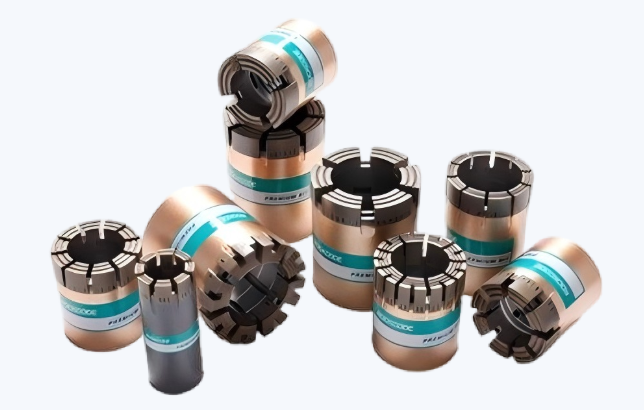
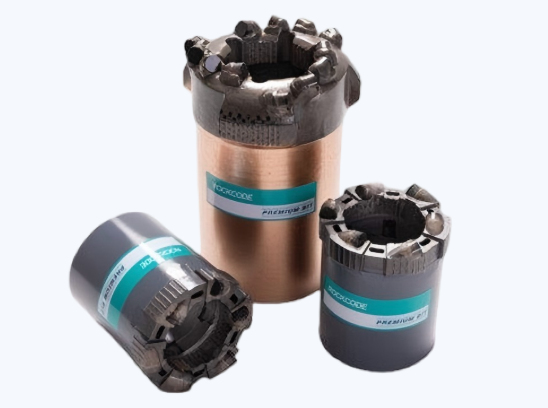
Technology-Driven Approach and Performance Verification: We offer more than just products; we offer solutions. ROCKCODE supports its performance promises with detailed technical documentation. This technical collaboration helps clients reduce operational risks and improve the reliability of exploration data.
Reliable Supply Chain and Global Support: As a direct-to-factory manufacturer, we guarantee stable supply and rigorous quality control. Our comprehensive global logistics and export compliance system ensures that international customers receive the equipment they need in a timely and efficient manner.
Conclusion
From historical materials like bortz and carbon to today’s precision-engineered diamond core bits, drilling technology has advanced through both empirical observation and scientific innovation. ROCKCODE is dedicated to providing the best core bits, ensuring that our clients can complete their projects on time and within budget.
For more information on how ROCKCODE can assist you in your drilling projects, visit our website or contact us directly. We are here to help you navigate the complexities of geological exploration and drilling operations.
→ For more information about ROCKCODE’s Products, please visit: https://www.rockcodebit.com/drill-bits-products
→ Email us at: info@rockcodebit.com
→ Information in this article is for general reference only. For specific drilling projects and drilling bits, please consult qualified professionals. Thank you.
Source
1.Diamond Drill Handbook: https://archive.org/details/diamonddrillhand0000cumm
2.International Journal of Rock Mechanics and Mining Sciences: https://www.sciencedirect.com/science/article/pii/S1365160910000566
https://www.rockcodebit.com/diamonds-for-drilling-from-bortz-and-carbon-to-modern-core-bits.html
Comments (0)