









In industrial manufacturing environments—such as coatings, composites, rubber products, electronics, and automotive components—the curing stage directly determines product performance, consistency, and throughput. A well-designed curing line production line is not merely a conveyor system; it is a precision-engineered infrastructure that integrates mechanical stability, controlled material handling, and process reliability.
As manufacturers pursue higher efficiency and lower defect rates, curing line design has evolved from simple transport solutions to robust, integrated production systems. Companies like Bluemann are responding to this demand by delivering curing line production lines that combine structural strength, stable transmission, and refined industrial design.
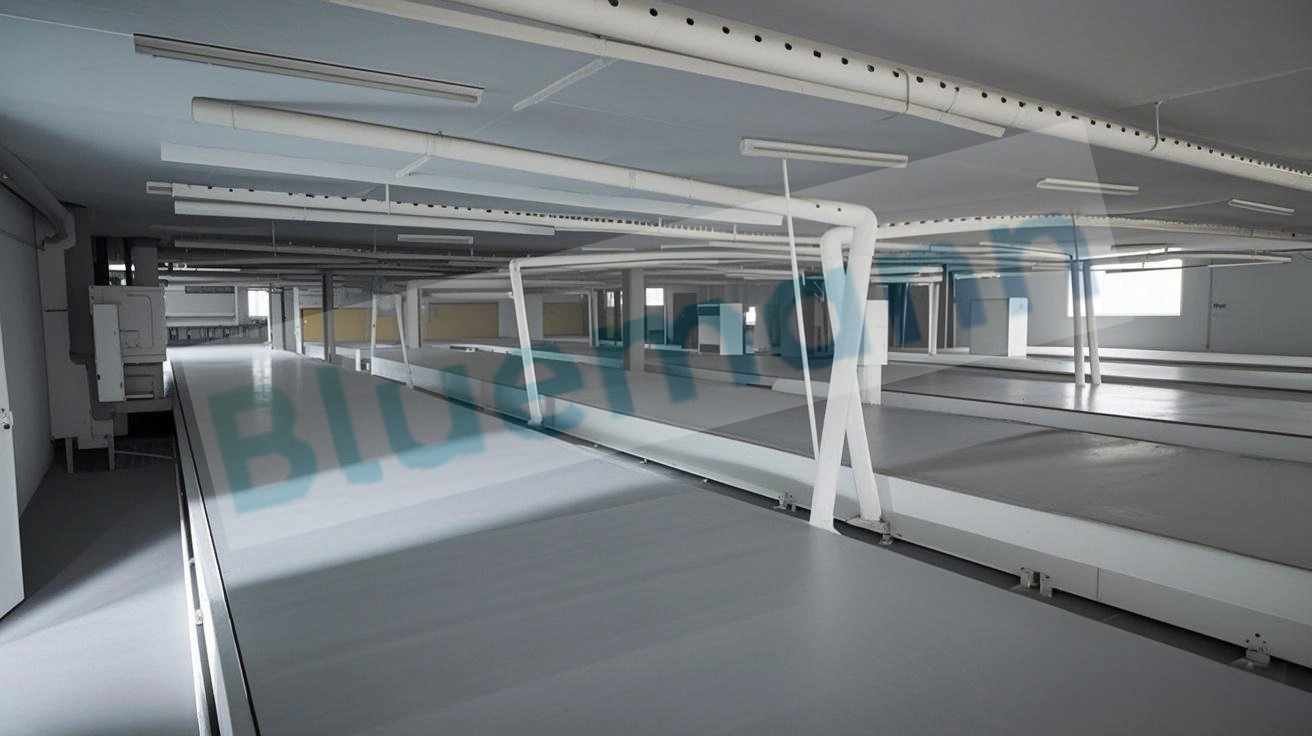
Understanding the Role of a Curing Line Production Line
A curing line production line is designed to transport components through controlled curing environments while maintaining positional stability and surface protection. It must support continuous operation, consistent speed control, and compatibility with downstream and upstream equipment.
Key functions include:
-
Stable conveying during thermal or chemical curing processes
-
Protection of product surfaces during transport
-
Long-term mechanical reliability under industrial loads
-
Seamless integration into automated production workflows
The performance of the curing line directly impacts curing uniformity, product appearance, and final quality.
Structural Design: Square Tube Welded Frame for Industrial Strength
Rigid Frame Construction
The frame of a high-quality curing line production line is welded using square steel tubes, forming a rigid and load-bearing structure. This construction method offers several engineering advantages:
-
High torsional rigidity and load capacity
-
Excellent resistance to deformation during continuous operation
-
Stable alignment of conveyor components over long distances
Welded square tube frames are particularly suited for curing environments where equipment may be exposed to heat, vibration, and long operating cycles.
Functional and Aesthetic Integration
Beyond strength, the frame design also contributes to the overall visual quality of the production line. Clean welds, precise alignment, and refined finishing result in an installation that reflects modern industrial standards—an increasingly important factor for high-end manufacturing facilities.
Conveyor Chain Plate Surface: PVC for Protection and Stability
PVC Plate Surface for Gentle Material Handling
The surface of the conveyor chain plate is covered with PVC plates, a critical feature in curing line production line design. PVC surfaces provide:
-
Smooth, non-abrasive contact with components
-
Reduced risk of scratching or damaging product surfaces
-
Improved friction control for stable transport
This is especially important for coated, painted, or semi-finished components that are vulnerable to surface defects during curing.
Stable and Reliable Transmission
PVC-covered chain plates ensure uniform load distribution across the conveyor, reducing slippage and vibration. The result is a transmission system that operates smoothly and consistently, even under varying load conditions.
For curing processes that demand precise dwell times and synchronized movement, transmission stability is essential.
Operational Reliability in Continuous Production
A curing line production line must perform reliably over extended operating periods. Structural rigidity combined with stable conveyor transmission contributes to:
-
Reduced maintenance frequency
-
Lower risk of unplanned downtime
-
Consistent curing cycle timing
These factors directly translate into higher production efficiency and predictable output quality—key metrics in industrial manufacturing operations.
Application Scenarios Across Industries
The versatility of a curing line production line allows it to serve a wide range of industrial applications, including:
-
Coating and painting production lines
-
Rubber and polymer curing processes
-
Composite material manufacturing
-
Electronic component processing
-
Automotive and industrial parts finishing
In each scenario, the same core requirements apply: structural stability, surface protection, and reliable material flow.
Blumann: Precision-Driven Curing Line Solutions
Bluemann specializes in the design and manufacturing of industrial production line equipment, with a strong focus on curing line systems. By combining solid structural engineering with practical material selection, Blumann delivers curing line production lines that meet the real demands of modern factories.
Key strengths of Blumann curing line solutions include:
-
Robust welded square-tube frame construction
-
PVC-covered conveyor chain plates for component protection
-
Attention to mechanical detail and operational stability
-
Adaptability to customized production layouts
Through continuous refinement of design and manufacturing processes, Blumann supports manufacturers seeking long-term reliability and consistent curing performance.
Conclusion: Building Curing Reliability into the Production Line
The curing line production line plays a decisive role in modern industrial manufacturing. With a welded square-tube frame providing structural strength and a PVC-covered conveyor chain plate ensuring stable, damage-free transmission, the system supports both process precision and product integrity.
Backed by manufacturers like Bluemann, these curing line solutions offer the durability, reliability, and engineering quality required for today’s high-performance production environments.
Comments (0)