








The US Style Metal Cylinder has evolved into a core component across manufacturing, mechanical engineering, energy equipment, pneumatic systems, automotive structures, and multiple high-demand industrial sectors. As design standards continue to tighten and application environments grow increasingly severe, the industry has shifted toward high-performance cylinders capable of delivering dimensional stability, corrosion resistance, and extended service life.
Manufacturers such as Contriu have been at the forefront of this shift, refining material selection, machining tolerances, thermal resistance characteristics, and structural reinforcement to ensure US style metal cylinders meet both legacy specifications and modern performance expectations.
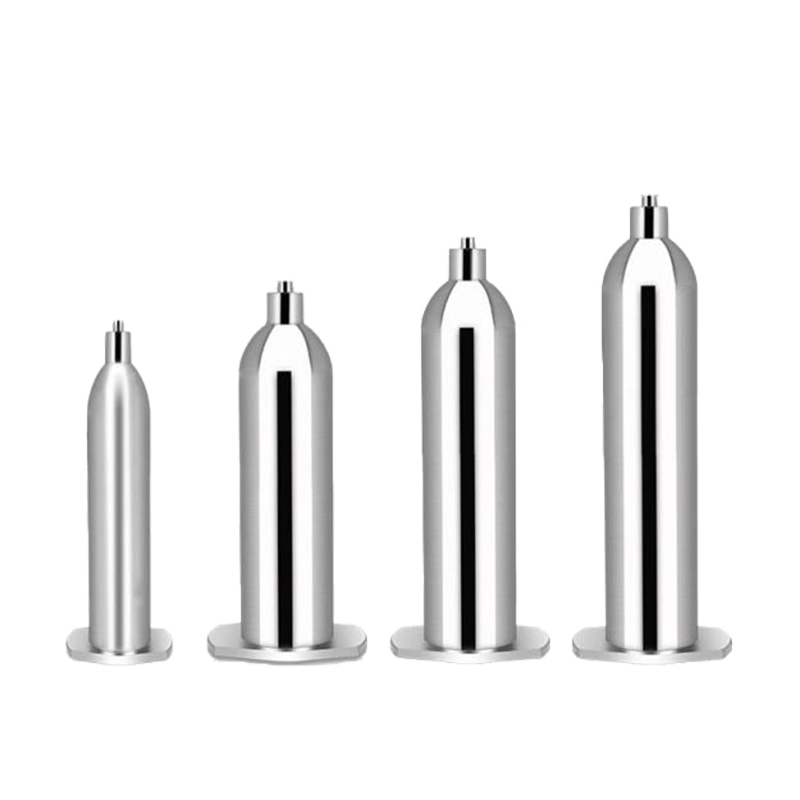
1. Material Science Foundations: Why Stainless Steel Outperforms Traditional Alloys
A US Style Metal Cylinder fabricated from high-grade stainless steel offers substantial technical advantages over carbon steel, cast alloy, or aluminum tubes. In industrial environments involving pressure cycling, thermal fluctuation, and corrosive agents, stainless steel maintains structural reliability.
1.1 Superior Corrosion Resistance
The chromium-rich composition of stainless steel forms a self-repairing passive oxide layer that prevents pitting, chemical degradation, and atmospheric corrosion.
This is especially critical in:
oil and gas processing
marine and offshore projects
chemical and pharmaceutical systems
steam, high-humidity, or acidic environments
Contriu’s cylinders use material grades optimized for both corrosion resistance and mechanical strength, ensuring stable long-term performance even under aggressive operating conditions.
1.2 High Temperature Resistance and Dimensional Stability
Thermal shock and sustained high temperatures often cause distortion, micro-cracking, or strength reduction in inferior alloys. Stainless steel cylinders retain their geometry, load capacity, and sealing fit during:
prolonged high-temperature exposure
rapid thermal cycling
heat-assisted forming or molding processes
Dimensional integrity is essential for maintaining sealing performance, pressure accuracy, and mechanical alignment in critical assemblies.
2. Integrated Manufacturing: Eliminating Weak Points Through Precision Engineering
Modern US Style Metal Cylinders are no longer assembled through multiple welded joints. Instead, leading manufacturers adopt integrated forming and machining processes, which compress structural tolerances and enhance durability.
2.1 Seamless Forming for Structural Strength
A cylinder produced through integrated forming eliminates weld seams and joint interfaces that traditionally serve as stress concentrators. This provides:
higher internal pressure capacity
reduced risk of fatigue failure
superior resilience to vibration and impact
longer service life under cyclic loads
2.2 Precision CNC Machining
Contriu employs CNC-controlled turning, honing, and internal surface polishing processes to achieve:
high circularity precision
micro-level surface smoothness
uniform wall thickness
stable fit with embedded screws and accessory components
These manufacturing enhancements contribute to improved sealing performance, smoother mechanical motion, and compatibility with high-pressure or high-speed applications.
3. Structural Engineering: Embedded Screw Design for Secure Mounting
The US Style Metal Cylinder utilizes a screw-embedded interface, a design element that greatly strengthens mechanical fastening reliability.
3.1 Anti-Loosening Performance
By embedding screws directly into the cylinder wall structure, the system achieves:
stable locking force
reduced risk of loosening during vibration or shock
compatibility with automated or high-load systems
3.2 Easy Installation and Alignment
Embedded screw features simplify integration with brackets, manifolds, and mechanical assemblies, reducing alignment errors and installation time.
3.3 Extended Service Life Through Reinforced Threads
Contriu’s reinforced threaded interfaces maintain their integrity even after repeated assembly cycles, resisting stripping and metal fatigue over long-term operation.
4. Durability and Mechanical Reliability: Why These Cylinders Outlast Traditional Components
Durability is not simply a function of material—it is the result of engineering interactions between manufacturing, surface treatment, mechanical design, and usage environment.
4.1 Resistance to Deformation
The high-strength stainless-steel body resists bending, warping, and compression deformation under:
static loads
dynamic cyclic stresses
impact or shock loads
rapid pressure fluctuations
4.2 Repeated Use Without Performance Loss
US Style Metal Cylinders from Contriu are engineered for repeated use in industrial environments where components undergo:
continuous pressure cycling
mechanical extension and retraction
high operating frequencies
Unlike lower-cost alternatives, these cylinders do not lose structural integrity or sealing capability over time.
4.3 Long Service Life, Reduced Replacement Costs
Customers in manufacturing, automation, and energy industries benefit from significantly reduced maintenance cycles, lower downtime, and improved system reliability.
5. Customization: Adapting to the Modern Industrial Landscape
One of the strongest advantages of the US Style Metal Cylinder is its adaptability. Industrial systems no longer rely on one-size-fits-all components; instead, they require cylinders tailored to exacting performance criteria.
5.1 Customizable Dimensions
Contriu supports customizations such as:
inner diameter
outer diameter
wall thickness
length (short tube, extended tube, deep cylinder)
This ensures compatibility across diverse machine architectures.
5.2 Performance-Specific Modifications
Depending on application requirements, cylinders can be optimized for:
high-pressure resistance
elevated temperature tolerance
dynamic mechanical loads
special chemical environments
5.3 Full Model Range for Sector-Specific Applications
Contriu offers custom models suitable for:
pneumatic cylinders
hydraulic systems
industrial automation equipment
laboratory and testing devices
energy and petrochemical installations
This modular flexibility makes the US Style Metal Cylinder a future-proof choice for engineers and purchasing managers.
Conclusion
The modern US Style Metal Cylinder integrates material science, mechanical engineering, and advanced manufacturing to deliver exceptional performance in demanding environments. Its stainless-steel construction, high-temperature resistance, corrosion-proof design, embedded screws, and customizable specifications make it a strategic solution for high-reliability industrial applications.
With manufacturers like Contriu pushing the boundaries of precision production, businesses can rely on these cylinders to deliver long-term operational stability, reduced downtime, and superior mechanical integrity.
Comments (0)