








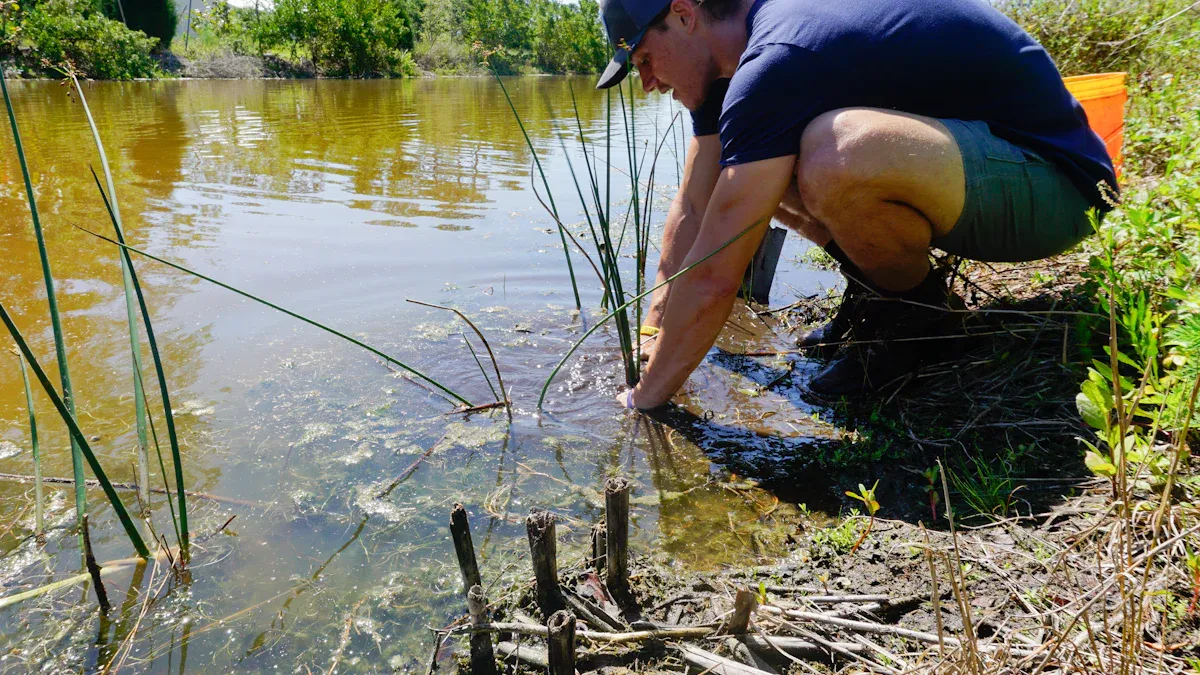
You help keep the environment safe by using heavy metal analysis equipment. Heavy metals stay in the environment for a long time. They can cause problems like cancer and infertility. They can also make crops grow less. These metals may hurt DNA and harm fish and other water animals. Testing often helps you find dangerous metals early. This helps keep people healthy. It makes sure products are safe and follow rules.
Key Takeaways
-
Heavy metal analysis equipment helps find dangerous metals. These metals can hurt people and nature.
-
Pick the best tool for your job. ICP-MS works well for small amounts. ICP-OES is good for normal checks.
-
Getting samples ready the right way is very important. It helps you get correct results. It also lowers the chance of mixing things up when you test.
-
Learn about the rules for testing. This keeps people safe and helps you follow the law.
-
Use new portable tools for fast field tests. These tools make it simple to check heavy metal levels anywhere.
Heavy Metal Analysis Equipment Overview
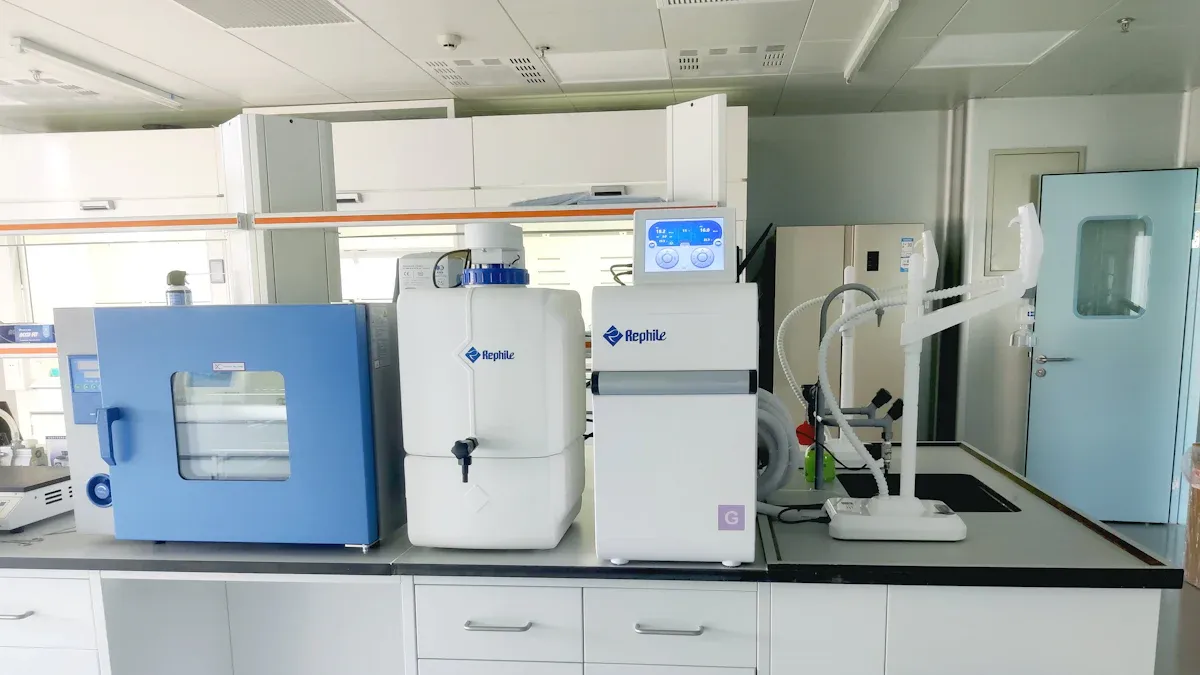
Heavy metal analysis equipment helps you find harmful metals. Each tool solves a different problem. You learn about each tool’s strengths and uses. This helps you pick the best one.
ICP-MS and ICP-OES
ICP-MS and ICP-OES are strong tools for heavy metal analysis equipment. ICP-MS is used all over the world. It has about 60% of the market. You use ICP-MS to find tiny amounts of toxic metals. It can find cadmium at 0.07 ppb. It can find arsenic and lead at 1.5–2.0 ppb. This helps you follow strict rules.
ICP-OES works for samples with lots of minerals. You use it for regular tests. It costs less and is easier to use. ICP-OES can measure low and high levels of metals.
Tip: ICP-MS is best for small amounts and following rules. ICP-OES is better for regular checks and lots of metals.
Here is a table that shows costs and maintenance:
|
Technology |
Initial Costs |
Operating Costs |
Maintenance Complexity |
|---|---|---|---|
|
ICP-MS |
Higher |
Higher |
More complex |
|
ICP-OES |
Lower |
Lower |
Easier |
ICP-MS needs very pure chemicals. ICP-OES saves you money and time.
Atomic Absorption Spectroscopy (AAS)
AAS is another tool for heavy metal analysis equipment. You use AAS when you want a cheap and reliable way. It works for lead, cadmium, and arsenic in water, soil, and air. AAS can find metals at ppb levels. This helps you follow rules.
AAS gives you many good things:
|
Advantage |
Description |
|---|---|
|
High Sensitivity |
Finds metal concentrations at ppm or ppb levels. |
|
Specificity |
Targets specific elements without interference. |
|
Versatility |
Works with many sample types and metals. |
|
Cost-Effective |
Needs less sample preparation and fewer consumables. |
|
Ease of Use |
Modern instruments are user-friendly and automated. |
You can use AAS for many jobs:
-
Checking wastewater samples.
-
Testing soil for pollution.
AAS helps you follow rules and makes testing easy.
X-Ray Fluorescence (XRF)
XRF is a tool for heavy metal analysis equipment. It helps you check soils, rocks, and tissues. You use XRF to find trace and heavy elements. Soil is important for XRF. It holds pollution and helps grow food.
You use XRF for quick checks of metals in soil. But XRF has some limits:
-
It is less sensitive in hard samples.
-
XRF does not work for very low levels.
Use XRF when you need fast results for big elements. Use it when you want to check large areas. For very low levels, use ICP-MS or AAS.
Cold Vapor AAS (CV-AAS)
CV-AAS is a special tool for mercury. You use CV-AAS to measure mercury in water and air. It turns mercury into vapor and measures light.
Here are some common mercury detection limits for CV-AAS:
|
Method Description |
Detection Limit (µg/L) |
|---|---|
|
Lutze553 method |
0.1−1 |
|
BITC554 procedures |
0.2−1 |
|
Boehnke562 method |
1−1 (electrodeless) |
|
Korenaga et al. |
0.5−1 |
|
Welz and Schuber-Jacobs |
3−1 (50-mL sample) |
You use CV-AAS to find mercury at low levels. It helps keep water and air clean.
Note: CV-AAS is best for mercury. For other metals, use ICP-MS, ICP-OES, or AAS.
Heavy metal analysis equipment gives you many choices. You pick the right tool for your sample, needs, and budget. This helps you keep the environment safe and reach your goals.
Principles of Heavy Metal Testing in Environmental Monitoring
Detection Mechanisms
There are different ways to find heavy metals. Each way helps you find metals in the environment. The table below shows the main ways and how they work:
|
Description |
|
|---|---|
|
Electrochemical Sensors |
Use nanomaterials and special electrodes to spot metal ions. |
|
Colorimetric Sensors |
Change color when they react with metals, giving you quick results. |
|
Fluorescent Sensors |
Glow or change light when metals are present, making detection very sensitive. |
|
Surface-enhanced Raman Scattering |
Boosts signals using tiny particles, helping you see even small amounts of metals. |
Fluorescence-based methods are fast and sensitive. Spectroscopic methods, like atomic absorption, also help with testing. Sometimes, some metals can mess up fluorescence. You might need more than one way to get the right answer.
Applications in Water, Soil, and Air
Heavy metal testing is used in many places. It helps protect the environment and people’s health. Here are some common uses:
-
Environmental monitoring: You check pollution and see if nature is healthy.
-
Food safety: You test seafood, rice, and vegetables for metals.
-
Occupational health: You check if workers are exposed to metals in jobs like mining.
-
Industrial quality control: You make sure factories follow safety rules.
SGS labs test air, water, soil, and waste for over 450 substances. This shows how important heavy metal testing is for the environment.
The type of sample is important. Soil can be hard to test and may change your results. Some tools, like LIBS, let you test soil with less work.
Strengths and Limitations
Each way to test heavy metals has good and bad points. The table below helps you compare them:
|
Method |
Strengths |
Limitations |
|---|---|---|
|
AAS |
Very sensitive and specific |
Needs a lab and takes time to prepare samples |
|
ICP-MS |
High sensitivity, good for strict rules |
Expensive and needs a lab |
|
XRF |
Portable and fast |
Less sensitive, needs bigger samples |
|
CV-AAS |
Good for certain metals like mercury |
Only works for some metals, needs skilled users |
Other things can change your results. You may need to use more than one way to get the best answer. Heavy metal testing helps keep the environment safe and follow the rules.
Sample Preparation for Heavy Metal Content Analysis
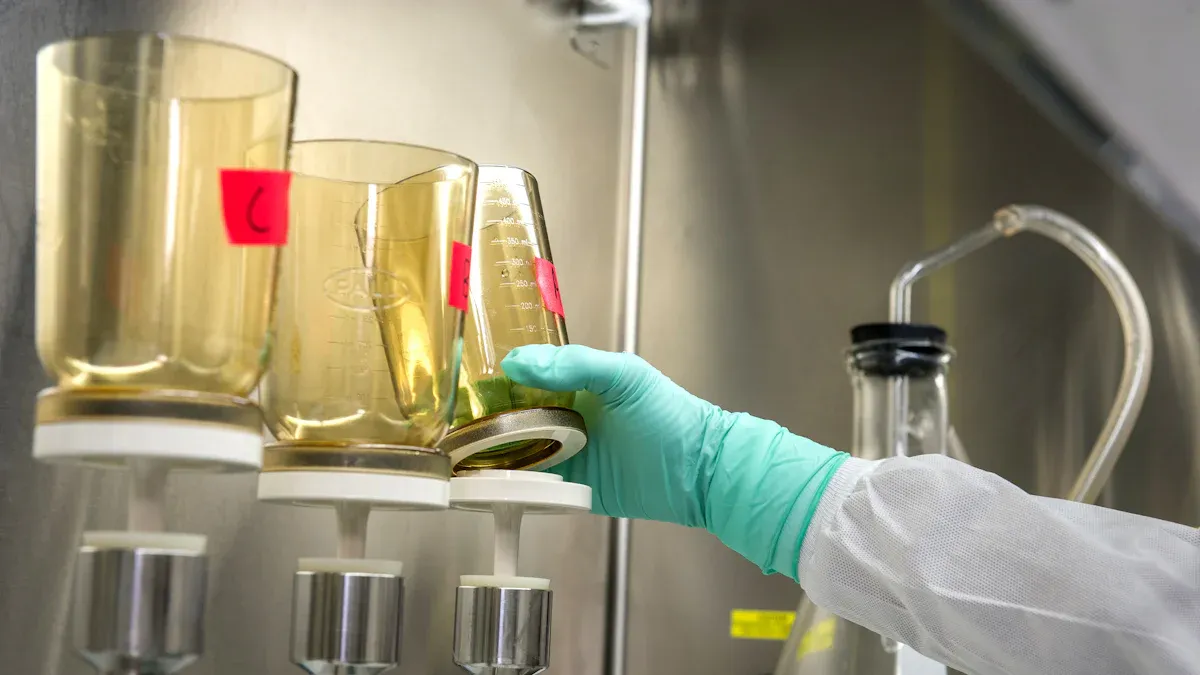
Digestion and Extraction Methods
You must get your samples ready before testing for heavy metals. Good preparation helps you get the right results. It also helps you avoid mistakes. First, you break down your sample. This lets you measure the metals inside. You use digestion and extraction methods for this.
Aqua regia digestion is used a lot. You mix hydrochloric acid and nitric acid. This mix helps dissolve metals from solid samples. It works for many metals, even hard ones. Many labs use it to check for heavy metals in soil and waste.
Microwave-assisted digestion is another common way. You put your sample in a closed container. Then you heat it with microwaves. This makes the process faster. It helps you get more metals out. It works for soil, sediment, and other tough materials. You can also use open vessel digestion with a digester block. But microwave digestion gives you better results for heavy metal testing.
The table below shows how digestion methods change recovery rates in heavy metal testing:
|
Digestion Method |
Recovery Rate |
Notes |
|---|---|---|
|
Microwave-assisted digestion |
Close to 100% |
Best for soil and sediment with oxides and silicates |
|
Acidic digestion (Aqua regia) |
Close to 100% |
Good for total metals, except those in silicates |
|
USEPA 3051 |
Recommended |
Works for Cd, Cu, Pb, Zn from mining and industrial sources |
Filtration and Accuracy
After digestion, you need to filter your sample. Filtration takes out particles that can block your equipment. It also stops changes in your results. You must use clean labware and pure chemicals. Dirty tools or water can cause contamination. Even dust or wet air in the lab can be a problem.
You need to watch for contamination during heavy metal testing. Most mistakes happen before you test. Bad handling, dirty pipette tips, and dust in the air can cause contamination. Up to 75% of lab mistakes come from this step. You can stop these mistakes by using certified reference materials. You should also follow strict cleaning steps.
Tip: Always wear gloves and use clean tools. This lowers the risk of contamination during heavy metal testing.
Careful sample preparation helps you find the real level of heavy metals in your samples. This step keeps the environment safe. It also helps you get the right results in heavy metal testing.
Regulatory Compliance and Public Health Protection
Meeting Environmental Standards
You help keep people safe by checking heavy metals. You must follow rules from groups like the EPA, WHO, and EU. These groups set limits for heavy metals in water, soil, and air. The limits help lower health risks. You need to know these rules to protect your community.
Here is a table with some limits for heavy metals in soil and plants:
|
Heavy Metal |
Permissible Limit in Soil (mg·Kg−1) |
Permissible Limit in Plants (mg·Kg−1) |
|---|---|---|
|
Pb |
Highest |
Lower than Cu |
|
Zn |
Moderate |
Moderate |
|
Cu |
Moderate |
Highest |
|
Cd |
Lowest |
Most serious accumulation |
You must compare your results to these limits. This helps you follow the rules and keep people healthy. You also need to know which group sets the rules for your area. The table below shows how each group helps with rules:
|
Regulatory Agency |
Role in Compliance Evaluation |
|---|---|
|
WHO |
Sets world guidelines for heavy metals in water and food. |
|
EPA |
Makes rules for heavy metals in water, soil, and air in the U.S. |
|
EU |
Sets rules for heavy metals in food and the environment. |
You help your community by following these rules. You lower health risks and keep the environment clean.
Equipment Selection for Health and Safety
You must pick the right heavy metal analysis equipment. The right tool helps you get good results and follow the rules. You need to think about detection range, sensitivity, and precision. These features help you find small amounts of metals that can hurt people.
Here is a table that shows what to look for when you pick equipment:
|
Criteria |
Description |
|---|---|
|
Detection Range |
Checks many heavy metals in different samples. |
|
Sensitivity |
Finds small changes in metal levels that affect health and safety. |
|
Precision |
Gives good results for following rules. |
|
User-Friendly Interface |
Makes testing easier for you and your team. |
|
Data Management |
Helps you report and keep track of results for rules. |
You need equipment that works with your sample and the rules you must follow. You help keep people safe by picking tools that meet the standards. You also make sure your results are trusted by rule-making groups.
Tip: Always check if your equipment follows the newest rules before you start testing. This helps you avoid mistakes and keeps your community safe.
Challenges and Advances in Heavy Metal Analysis Equipment
Sensitivity and Interference Issues
Testing for heavy metals is not always easy. You can have problems with sensitivity and interference. These problems can make your results wrong. Here are some common problems you might see:
-
Spectral interferences happen when other things mix with your metals. This makes it hard to know the real amount of heavy metals.
-
Some techniques need special skills. You must know how to use the equipment. If you do not have training, you can make mistakes.
-
The way particles are shaped or placed can change your results. This is called the orientation effect.
-
Noise and shaking in the environment can bother your equipment. These things can make your data less good.
-
Soil can have minerals that look like metals. This can trick your equipment and give you wrong readings.
You need to learn how to fix these problems. You can use different ways to make your tests better and more sensitive.
Automation and Portable Solutions
New tools help you fix many problems in heavy metal testing. Modern methods make your work faster and more correct. The table below shows new sensor types and what they do:
|
Sensor Type |
Functionality |
Advantages |
|---|---|---|
|
Optical Sensors |
Find heavy metal ions by changes in light signals. |
Cheap to use, quick results, easy to use. |
|
Electrochemical Sensors |
Turn metal amounts into electric signals. |
Very sensitive and good at finding certain metals. |
|
Microelectrodes |
Used for electric tests, built with small circuits. |
Very small and can be used in tiny devices. |
You can now use portable tools to test outside the lab. These tools help you check for heavy metals in the field. Here are some examples:
-
A spinning paper device to find heavy metal ions.
-
A paper chip that glows to show arsenite.
-
A color sensor for mercury that works with a phone.
-
An electric sensor for testing groundwater.
-
A fiber-optic tool for checking pollution.
-
A paper sensor for mercury and lead that does not use cells.
New methods include better Laser-Induced Breakdown Spectroscopy (LIBS) for fast checks, using X-Ray Fluorescence (XRF) and Optical Emission Spectroscopy (OES) together for better results, and making analyzers smaller for field use. You also get better ways to manage and share your data.
Portable tools give you fast answers and help you fix problems in the field. The table below shows how portable and lab tools compare:
|
Device |
Accuracy |
Reliability |
Best Use Case |
|---|---|---|---|
|
OES |
Very exact, great for small amounts |
Very reliable, good for strict rules |
Lab work that needs careful testing |
|
XRF |
Good for finding metals, quick answers |
Reliable for checking and sorting |
Testing and sorting metal on-site |
|
LIBS |
Works for many things, fast answers |
Okay, needs to be set up right |
Portable use when you need fast results |
You can use these new ways to make your testing better. You can solve problems and help keep the environment safe.
Tip: Try using new portable tools for faster heavy metal tests. You can check samples anywhere and trust your results.
You help keep people safe when you pick the right equipment. Good testing lets you follow rules and protect your community. First, look at your sample and what you want to measure. This helps you choose the best tool. If you need help, read guides from trusted labs or ask experts in environmental testing.
FAQ
What risks do you face from heavy metal exposure?
Heavy metal exposure can hurt your organs. It can cause problems with your nervous system. It can also raise your chance of getting cancer. Kids are at even more risk than adults. You should follow safety rules to stay healthy.
How do analytical techniques help you lower risk from heavy metal exposure?
Analytical techniques help you find heavy metals early. You use them to test water, soil, and air. Early testing helps you avoid health problems. You can follow safety rules and stop pollution. These techniques show how pollution affects the environment.
Why do guidelines and regulatory frameworks matter for heavy metal exposure?
Guidelines and rules keep you safe from heavy metals. They set safe amounts for metals in the environment. You need to follow these rules to lower your risk. Groups like the united states environmental protection agency make these rules. Always check the newest rules for your area.
Can portable instruments for heavy metal analysis help you in the field?
You can use portable instruments to test samples outside the lab. These tools help you find heavy metals fast. Quick results help you stay safe. Portable tools help people learn about pollution and its risks.
How can you raise awareness about the impact of heavy metal exposure?
You can share facts about heavy metal exposure and its risks. You can talk about how it hurts health and the environment. You should teach others about safety rules and testing methods. Sharing knowledge helps everyone stay safe and protect nature.
https://www.schinstrument.com/heavy-metal-analysis-equipment-environmental-monitoring-guide.html
Comments (0)