









In today’s performance-driven textile market, raw material selection is no longer based solely on tradition—it is guided by measurable mechanical properties, sustainability metrics, and downstream processing compatibility. Linen yarn, derived from flax fibers, has re-emerged as a strategic material for manufacturers seeking durability, breathability, and environmental responsibility without compromising structural performance.
From high-end fashion textiles to industrial-grade fabrics, linen yarn offers a rare combination of tensile strength, moisture management, and biodegradability. Companies such as ASIN are advancing linen yarn production through optimized fiber selection, precision spinning technologies, and strict quality assurance systems to meet the evolving requirements of global textile brands and industrial buyers.
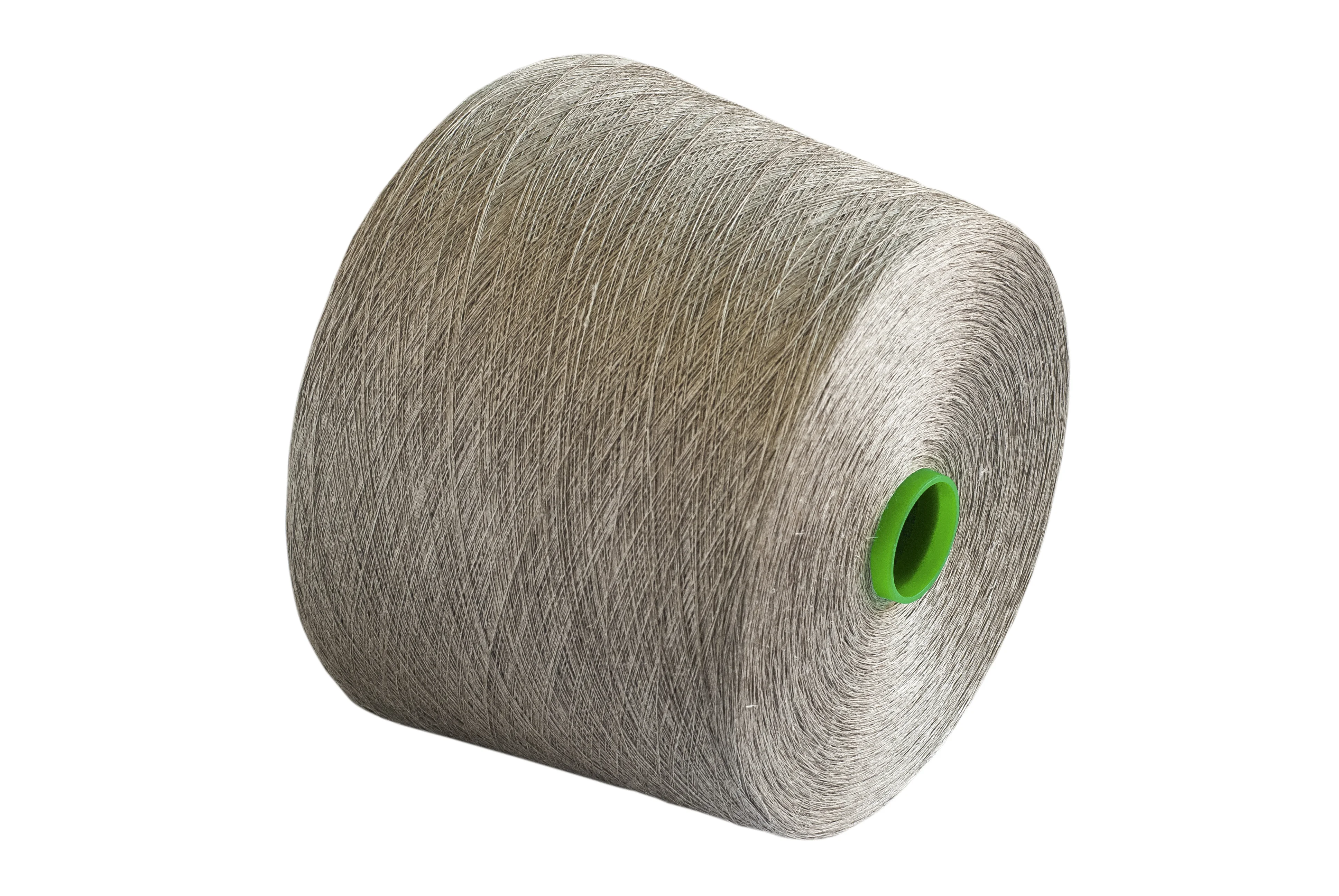
1. Fiber Science Behind Linen Yarn
Linen yarn is produced from flax (Linum usitatissimum) bast fibers, which are extracted through retting, scutching, and hackling processes. What distinguishes linen yarn from other natural yarns lies in its inherent fiber structure:
-
High cellulose content
-
Long staple fiber length
-
Naturally smooth surface morphology
-
High crystallinity contributing to tensile strength
Mechanical Properties
Compared to cotton yarn, linen yarn exhibits:
-
Higher tensile strength
-
Lower elasticity
-
Superior abrasion resistance
-
Enhanced dimensional stability
This makes linen yarn particularly suitable for applications where structural integrity and longevity are essential, such as upholstery fabrics, premium garments, and home textiles.
2. Spinning Technologies: Precision Matters
The quality of linen yarn is heavily influenced by spinning methodology. Advanced manufacturers like ASIN utilize refined spinning systems to control yarn uniformity and twist consistency.
Key Production Factors:
-
Fiber alignment during carding and drawing
-
Controlled twist per meter (TPM)
-
Moisture regulation during spinning
-
Real-time yarn evenness monitoring
Ring spinning remains common for producing fine linen yarn counts, while wet spinning techniques are used to enhance fiber cohesion and surface smoothness in high-quality applications.
Consistency in linear density (tex or Nm) ensures predictable performance during weaving and knitting processes. Yarn irregularities can lead to loom stoppages, fabric defects, and waste—issues that professional manufacturers actively mitigate through strict quality control protocols.
3. Performance Advantages in Textile Applications
3.1 Thermal Regulation and Moisture Management
Linen yarn offers excellent breathability due to its hollow fiber structure and natural moisture-wicking capability. It can absorb up to 20% of its weight in moisture without feeling damp, making it ideal for summer apparel and bedding textiles.
3.2 Durability and Aging Performance
Unlike many synthetic fibers, linen yarn becomes softer and more comfortable with repeated washing while maintaining structural integrity. This aging characteristic enhances long-term product value.
3.3 Antibacterial and Hypoallergenic Qualities
Flax fibers possess natural antimicrobial properties, reducing bacterial growth and odor retention. This makes linen yarn suitable for medical textiles and eco-conscious clothing lines.
4. Sustainability and Environmental Impact
Sustainability is no longer a marketing claim—it is a procurement requirement.
Flax cultivation requires:
-
Minimal irrigation compared to cotton
-
Fewer chemical inputs
-
Lower carbon footprint
-
Full biodegradability
Linen yarn production, when optimized, aligns with global ESG standards. ASIN integrates responsible sourcing practices and process efficiency to reduce energy consumption and waste during manufacturing.
For brands targeting eco-certifications, traceable linen yarn supply chains provide competitive advantages.
5. Industrial and Commercial Applications
Linen yarn is not limited to fashion textiles. Its industrial applications are expanding:
-
Upholstery fabrics
-
Decorative home textiles
-
Technical blended fabrics
-
Canvas materials
-
Sustainable composite reinforcements
Blending linen yarn with cotton, viscose, or synthetic fibers enhances versatility while preserving core performance attributes.
For manufacturers, selecting the correct yarn count, twist level, and blending ratio is critical to achieving desired fabric hand feel and mechanical performance.
6. Quality Control and Supply Reliability
In global textile supply chains, reliability and consistency are paramount.
ASIN implements:
-
Fiber grading based on length and fineness
-
Laboratory testing for tensile strength and elongation
-
Evenness and hairiness analysis
-
Color consistency validation for dyed yarns
-
Moisture regain testing
Such multi-stage quality assurance ensures that linen yarn batches meet international textile standards and downstream production specifications.
For bulk buyers and textile mills, predictable yarn performance reduces production risk and enhances fabric yield rates.
7. Why Professional Buyers Choose ASIN
ASIN’s expertise extends beyond supply—it encompasses:
-
Technical consultation for yarn selection
-
Custom yarn specification development
-
Scalable production capacity
-
Export logistics management
-
Long-term partnership approach
For textile mills and garment manufacturers, collaboration with an experienced linen yarn supplier reduces operational risk and enhances product competitiveness.
Conclusion
Linen yarn represents a convergence of traditional natural fiber heritage and modern industrial precision. Its superior mechanical properties, moisture management performance, and sustainability credentials make it a strategic material in today’s textile landscape.
When supported by advanced spinning technologies and rigorous quality control—as implemented by ASIN—linen yarn becomes more than a raw material. It becomes a performance-driven solution for sustainable textile innovation.
http://www.asinyarn.com/explore-linen-yarn-a-combination-of-lightness-and-durability.html
Comments (0)