








In many manufacturing environments, square and flat containers present unique challenges during labeling. Their angled edges, uneven surfaces, and varying shapes often increase the likelihood of skewed labels, poor adhesion, or inconsistent positioning. For industries such as food, personal care, chemicals, and pharmaceuticals, these inconsistencies not only affect brand presentation but can also lead to rework and compliance issues.
To address these challenges, enterprises are increasingly adopting specialized Square Bottle Labeling Machine solutions, which focus on precision and stability for non-round packaging. Understanding how these systems work—and when they provide the greatest value—can help manufacturers build more reliable and efficient labeling processes.
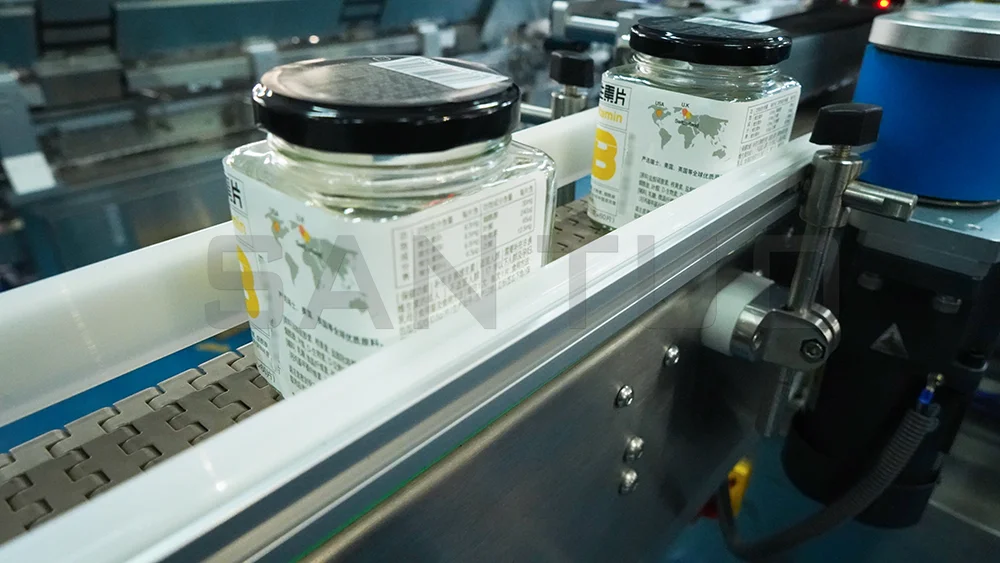
Why Square Containers Require a Different Labeling Approach
Round bottles rotate smoothly, allowing wrap-around labels to be applied evenly. Square or flat bottles, however, do not rotate symmetrically. Their edges require precise alignment, stable fixation, and controlled label dispensing to achieve consistent results.
Manufacturers dealing with large-format containers, tapered edges, or heavy-duty plastic bottles often experience:
-
Label drift, caused by small variations in bottle orientation
-
Air bubbles or wrinkles, especially on flat surfaces
-
Misalignment across multiple sides, particularly for large square bottles
-
Reduced labeling speed, due to increased handling complexity
These issues highlight the need for equipment specifically engineered to handle square and flat containers with high accuracy.
How Square Bottle Labeling Technology Works
Modern labeling systems for square bottles use a combination of mechanical bottle positioning, servo-driven controls, and adaptive label feeders. Key technological features include:
1. Multi-Point Positioning
Square containers must be fixed in place using precisely designed guides or clamps. This ensures that each bottle enters the labeling station at a consistent orientation.
2. Servo-Controlled Label Application
A closed-loop servo system manages label tension, feed accuracy, and application timing. This minimizes errors caused by inconsistent label release.
3. Adaptive Label Feed Adjustment
Because square bottles may include tapered or contoured surfaces, the labeling head must be adjustable in multiple dimensions to adapt to various shapes.
4. High-Speed Rotary or Linear Structures
Rotary structures are often preferred for high-volume applications. For example, solutions like the Big Round Bottle Rotary Labeling Machine integrate positioning features that can also support round, flat and square containers while maintaining speed and accuracy.
Benefits for Manufacturing Enterprises
Adopting a specialized Square Bottle Labeling Machine offers several operational advantages:
1. Higher Labeling Accuracy
Precise positioning mechanisms reduce human intervention and minimize label misalignment, improving both aesthetics and compliance.
2. Increased Productivity
Servo-driven label feeding and stable bottle handling enable reliable high-speed operation, even for large or heavy containers.
3. Reduced Downtime and Changeover Time
Multi-dimensional adjustment allows operators to switch smoothly between different bottle sizes or shapes.
4. Improved Brand Consistency
Accurate label placement enhances packaging appearance and ensures uniform presentation across production batches.
5. Stronger Flexibility for Multi-Shape Packaging
A single machine can often accommodate square, round, flat, and sometimes tapered bottles, supporting future product-line expansion.
Where This Technology Creates the Most Value
Square bottle labeling systems are particularly valuable for:
-
Daily chemical products such as detergents and disinfectants
-
Household items including cleaners and sanitizers
-
Food and condiment packaging, such as oils and sauces
-
Cosmetics with premium square bottle designs
-
Chemical and industrial products requiring durable labels
Enterprises that operate at high speeds or require multi-side labeling benefit the most from advanced positioning and tension control features.
Conclusion
Square and flat containers demand more from labeling technology than traditional round bottles. Precision, stability, and adaptability are essential for ensuring consistent application and maintaining packaging quality.
By leveraging modern Square Bottle Labeling Machine systems, manufacturers can reduce waste, improve operational efficiency, and enhance product presentation. Whether upgrading an existing line or planning a new facility, considering the specific challenges posed by square containers can help guide better equipment selection and long-term planning.
Comments (0)