








Pinoresinol diglucoside is not a compound that attracts flashy marketing campaigns. You will not find influencer posts about it. You will not discover breathless claims of overnight results. What you will find, if you look carefully, is a lignan with a forty-year history of pharmacological research, two specific clinical applications that actually work, and a supply chain defined less by hype than by a question that most buyers do not think to ask.
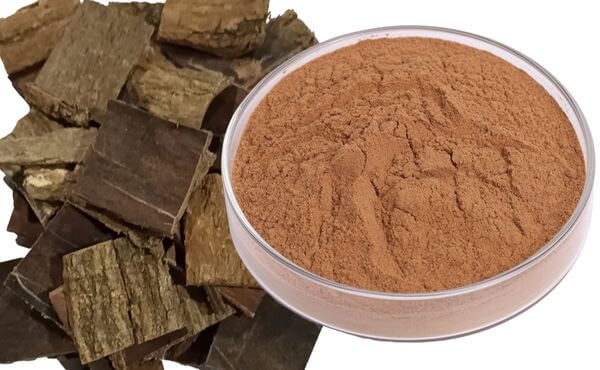
PDG is one of the major lignans isolated from the bark of Eucommia ulmoides—the sole species in its genus, a relic tree native to China that has been used in traditional medicine for over two thousand years. At the molecular level, it is a white crystalline powder with a distinctive solubility profile: soluble in boiling water, slightly soluble in cold water, and insoluble in organic solvents like ethanol and ether. CAS number 63902-38-5. Molecular formula C32H42O16. A molecular weight of roughly 682.67. Those are the dry facts. What follows from them is where procurement gets interesting.
Two Clinical Applications That Actually Have Data
PDG exhibits various pharmacological functions, but two specific areas have accumulated credible evidence.
The first is blood pressure regulation. The compound is a putative alpha-glucosidase inhibitor and has documented antihypertensive activity. Chinese and Russian clinical observations both recorded blood pressure reductions in hypertensive patients given eucommia preparations, without significant side effects. Notably, the mechanism of action differs from conventional antihypertensives—PDG is also a heat shock factor 1 inducer, increasing HSF1 expression by a factor of 1.041 at 3 micromolar concentration. This alternative pathway matters because it opens possibilities for combination approaches or for patients who do not respond well to standard treatments.
The second is bone health. PDG has been studied for its role in preventing osteoporosis, with research indicating effects on bone metabolism that complement its cardiovascular applications.
Beyond these two core areas, the compound demonstrates antioxidant, anti-tumor, immunity-enhancing, anti-fatigue, and anti-aging properties in laboratory settings. Traditional usage also associates it with liver and kidney support, as well as musculoskeletal benefits—strengthening bones and muscles, improving circulation through the waist and knees, and addressing muscle cramps in the lower extremities.
For formulators, the value proposition is straightforward: PDG offers two well-supported applications in categories where regulatory claims are increasingly difficult to establish with less-studied botanicals.
What the Supply Chain Actually Looks Like
The majority of the world's high-quality Eucommia ulmoides extract originates from Shaanxi Province, particularly around Xi'an, which hosts over eighty percent of active manufacturers. This concentration is not accidental. The province offers a favorable climate for cultivating Eucommia trees, centuries of traditional medicine knowledge, well-established agricultural networks for traceable raw material sourcing, and modern processing facilities integrating technologies such as supercritical CO₂ and ethanol-based extraction. Industrial clusters in Xi'an enable vertical integration from cultivation to final packaging, with facilities ranging from over 700 square meters to more than 12,000 square meters, supporting large-scale production. Guizhou, Sichuan, and Hunan also produce raw material, with Hunan-based Changsha Staherb operating as a major supplier in the standardized high-purity segment.
The supplier landscape divides into two distinct categories.
One category supplies standardized bark extracts that contain PDG as part of a broader phytochemical profile. Companies such as Shaanxi Jiuyuan Biotech preserve active ingredients from Eucommia leaves using advanced extraction technology. Oasier Nutri positions itself as a manufacturer handling production, R&D, and extraction of natural plants, with Eucommia ulmoides bark extract as a core offering. Jiangxi Puzheng Pharmaceutical operates as a manufacturer and wholesaler with twenty-five years in the industry.
The other category supplies high-purity PDG monomers. Changsha Staherb Natural Ingredients Co., Ltd., based in Hunan's high-tech development zone, lists Eucommia Bark Extract among its standardized high-purity products, offering purities ranging from five to ninety-five percent across its portfolio, supported by R&D partnerships with institutions including the CAS Kunming Institute of Botany and State Key Lab of Hunan Forest Products and Chemical Engineering. In the high-purity monomer space, Baoji Herbest Bio-Tech offers PDG analytical standard at high-performance liquid chromatography purity of ninety-eight percent or higher, packaging from ten milligrams to one gram per bottle for research applications. Nanjing Qingyun Biotechnology operates with a team spanning phytochemistry, TCM, biotechnology, natural medicinal chemistry, and modern instrumental analysis, with detection equipment including multiple HPLC units and gas chromatographs. Han Su Yuan in Shaanxi supplies one percent standardized PDG for functional food and cosmetic applications, emphasizing safety and natural ingredient sourcing.
The Procurement Reality Check
The difference between these supplier categories reflects different business models. Research-grade monomer suppliers maintain rigorous quality systems—dynamic countercurrent extraction, column separation, membrane separation, microwave drying, spray drying, and HPLC- or GC-based quality control. Standardized extract suppliers focus on cost-effective production of broader-spectrum ingredients for nutraceutical and cosmetic formulators.
For a buyer, the first decision is simple: Are you formulating a product where PDG is the primary active compound requiring precise dosing, or are you using Eucommia bark extract as part of a broader botanical blend where PDG contributes alongside chlorogenic acid, aucubin, and other constituents? The answer determines which supplier category makes sense.
But the second decision is more nuanced. PDG has been the subject of quality control research specifically because its extraction efficiency varies dramatically with method parameters. One study established optimal preparation conditions as sixty percent ethanol soaking for thirty minutes, followed by heat reflux extraction twice, with alcohol addition at 12.8 times the material weight, each extraction lasting one hour. Under these conditions, PDG extraction yield reached eighty-five percent—meaning even under optimized lab conditions, fifteen percent of the compound remained unrecovered. The quality control conditions specified an octadecylsilane-bonded silica gel column, methanol-to-water ratio of 25:75 as the mobile phase, flow rate of one milliliter per minute, and column temperature of thirty degrees Celsius.
What Demands Your Attention
These details matter because PDG is not an easy compound to extract cleanly. Its low solubility in cold water and organic solvents means conventional extraction methods leave significant material behind. The difference between a supplier who has optimized their process and one who has not shows up in batch-to-batch consistency, in residual solvent profiles, and in the physical handling characteristics of the final powder.
The China Pharmacopoeia specifies HPLC as the reference quantification method, with a detection wavelength of 283 nanometers and system suitability requirements of no less than three thousand theoretical plates for the PDG peak. The industry has largely adopted this standard. A supplier who cannot provide a batch-specific HPLC chromatogram with clearly annotated peak integration and system suitability data is not a partner—they are a liability.
Facility certifications offer another filter. GMP, ISO 9001 for quality management, and ISO 22000 for food safety are baseline expectations. For the cosmetic or pharmaceutical markets, Kosher, Halal, and FDA registration may be required. Shaanxi suppliers generally maintain export readiness with experience navigating international regulations and shipping protocols. But certification documents should be current and verifiable, not decorative.
The Eucommia extract market is dominated by Asia-Pacific, with China leading global production backed by supportive policies and a strong manufacturing base. Within that landscape, PDG is not the highest-volume botanical compound on the market, nor the most widely marketed. But for buyers who need a lignan with documented antihypertensive and anti-osteoporotic activity, who understand that extraction method determines bioavailability, and who have learned that the question worth asking is not "What is your price?" but "Show me your last three HPLC chromatograms"—PDG from a serious Chinese supplier is worth the effort required to find one.
Comments (0)