








The success of RNA-based therapies and vaccines depends on more than the choice of active ingredients. Researchers must also develop reliable formulation processes that produce consistent nanoparticles and support further process development.
Lipid nanoparticles (LNPs) have become an important area of research because they can deliver nucleic acids such as messenger RNA (mRNA) and small interfering RNA (siRNA). However, achieving consistent results can be challenging. Differences in mixing conditions, formulation composition, and processing parameters may affect the properties of the final nanoparticles.
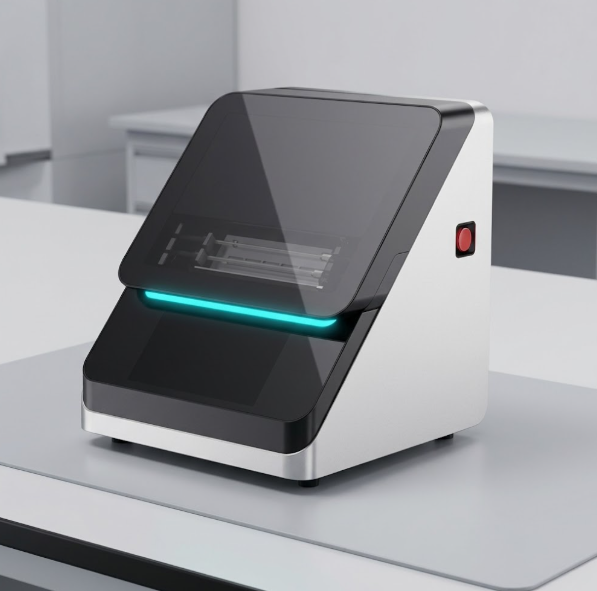
Microfluidic technology offers a controlled approach to studying these variables. The XNano™ PCV Microfluidic Equipment from XGen Bio is designed for microfluidic processing applications. For laboratories and pharmaceutical development teams, understanding the role of this equipment can help them evaluate suitable solutions for formulation research.
1. How Microfluidic Technology Helps with LNP Formulation
LNP formulation generally involves bringing a lipid phase into contact with an aqueous phase containing nucleic acids. As the two streams mix, the formulation components can assemble into nanoparticles under appropriate conditions.
The mixing process plays an important role in determining particle characteristics. Variations in mixing conditions may affect particle size, size distribution, and encapsulation efficiency. In conventional bulk mixing, maintaining consistent conditions throughout the process can be difficult, especially when working with formulations that respond sensitively to changes in mixing intensity.
Microfluidic equipment uses defined fluid channels to control how different liquid streams interact. This allows researchers to adjust operating parameters and investigate their effects on nanoparticle formation.
When evaluating XNano™ PCV Microfluidic Equipment, researchers should first confirm whether its configuration and operating specifications meet the requirements of their formulation experiments. The equipment provides a processing platform, but formulation performance must still be demonstrated through experimental testing and analytical measurements.
2. Which Parameters Influence LNP Quality?
Obtaining consistent LNPs requires attention to several formulation and process variables. Changing one parameter at a time can help researchers understand how individual factors affect the results.
Flow rate and flow rate ratio
The total flow rate and the ratio between the lipid and aqueous streams influence the mixing environment. Different formulations may require different settings, so suitable operating conditions should be established through controlled experiments.
Lipid composition and solution conditions
The choice of ionizable lipids, helper lipids, and other formulation components can affect nanoparticle formation. Other factors, including buffer composition, pH, and nucleic acid characteristics, may also influence the final product.
Particle size and size distribution
Particle size and polydispersity index (PDI) are commonly used to characterize LNP formulations. These measurements help researchers assess particle consistency and compare results across experiments.
Encapsulation efficiency and payload integrity
Encapsulation efficiency indicates how effectively the nucleic acid payload is incorporated into the nanoparticles. Additional tests may be needed to evaluate payload integrity, formulation stability, and biological performance.
By monitoring these parameters together, research teams can better identify the causes of variation and establish more reproducible formulation conditions.
3. Improving Process Reproducibility and Scale-Up Readiness
A formulation that performs well in a single laboratory experiment may not produce the same results when the process is repeated or transferred to another system. This creates an important challenge for pharmaceutical research and development.
Increasing production throughput alone does not guarantee that nanoparticle characteristics will remain unchanged. Differences in equipment design, flow conditions, fluid handling, and downstream processing can influence the final formulation.
Microfluidic equipment can support process development by allowing researchers to establish baseline conditions, adjust selected parameters, and compare experimental results. Repeated testing and clear documentation help determine whether the process remains consistent under the chosen conditions.
For teams considering XNano™ PCV Microfluidic Equipment, it is important to confirm the available flow-rate range, achievable throughput, mixing configuration, material compatibility, and supported applications directly with XGen Bio.
These checks are particularly relevant when a project may progress from early-stage laboratory research to larger-scale development. Any scale-up strategy should be supported by experimental data rather than assuming that the same settings will work across different production systems.
4. Applications in RNA and Biopharmaceutical Research
Microfluidic LNP formulation has potential applications across several areas of biotechnology. The specific requirements vary according to the nucleic acid payload, formulation chemistry, and intended use.
mRNA vaccine research
Researchers evaluate particle characteristics, encapsulation efficiency, payload integrity, and stability when developing mRNA vaccine formulations. Consistent processing conditions can make it easier to compare formulation candidates.
siRNA delivery
LNPs are studied as delivery systems for siRNA. Researchers may adjust lipid composition and processing conditions to investigate how these factors influence nanoparticle properties and delivery performance.
Gene therapy research
Lipid-based delivery systems are being investigated for different nucleic acid applications. Formulation development requires careful assessment of particle characteristics, payload integrity, and relevant biological outcomes.
Pharmaceutical process development
Controlled mixing can help research teams investigate process variables, repeat experiments, and collect data for later optimization. These activities are important when establishing a more robust formulation workflow.
Not every microfluidic system is suitable for every application. Researchers should match equipment capabilities to their experimental objectives, formulation requirements, and expected throughput.
5. What to Check Before Choosing Microfluidic Equipment
Selecting microfluidic equipment involves more than comparing product names or individual specifications. The system must fit the laboratory's actual workflow and future development plans.
Before making a purchase, consider the following factors:
-
Flow-rate range and throughput: Confirm that the system supports the volumes and processing rates required for the intended experiments.
-
Mixing configuration: Check whether the available design is appropriate for the formulation and mixing strategy.
-
Material compatibility: Verify that wetted materials are suitable for the solvents, buffers, and other components used in the process.
-
Parameter control: Determine which operating conditions can be adjusted and how easily experimental settings can be reproduced.
-
Cleaning and maintenance: Understand the procedures required between experiments and the associated operating requirements.
-
Technical support: Ask whether the supplier can provide product guidance, troubleshooting assistance, and application-related support.
For projects moving toward clinical development or GMP manufacturing, equipment selection is only one part of the overall process. Appropriate qualification, validation, documentation, and process controls must also be considered.
A careful review of these factors helps laboratories choose a system based on practical requirements instead of relying on general product descriptions.
6. Exploring XNano™ PCV Microfluidic Equipment from XGen Bio
XGen Bio offers microfluidic equipment and T-mixer solutions for LNP formulation and related biopharmaceutical research. Its product portfolio includes the XNano™ family and other microfluidic solutions.
For researchers evaluating XNano™ PCV Microfluidic Equipment, the first step is to compare the confirmed product specifications with their intended formulation process. Questions about operating ranges, mixing configuration, throughput, material compatibility, and application support should be addressed before equipment selection.
It is also useful to discuss the planned workflow with the supplier, particularly when a project involves multiple formulations or may require further process development. Clear communication about experimental objectives and operating requirements can help determine whether a particular configuration is appropriate.
The final decision should be based on verified specifications and the results required by the research team.
Conclusion
Consistent LNP formulation requires careful control of mixing conditions, formulation variables, and analytical testing. Microfluidic technology provides researchers with a practical way to investigate these factors and develop more reproducible processing methods for RNA therapeutics, vaccine research, and other nucleic acid delivery applications.
XNano™ PCV Microfluidic Equipment from XGen Bio is one option for laboratories exploring microfluidic solutions for formulation development. By confirming equipment capabilities, evaluating application compatibility, and establishing a systematic experimental workflow, researchers can make more informed equipment decisions and build a stronger foundation for future process development.
Comments (0)