









As the wave of the digital age sweeps across the world, the urgent need for security and connectivity is not only reshaping people's living scenes at an unprecedented speed , but also driving global demand for surveillance cameras.
At the domestic market level , with the acceleration of Digital China's infrastructure construction and the continued implementation of policies such as safe communities, a huge demand for public scenes has been created. Coupled with young families' personalized demands for "remote babysitting" and "pet monitoring", cost-effective and easy-to-install smart cameras have quickly penetrated all aspects of society.
Overseas , strict privacy compliance regulations in Europe and the United States have forced related products to upgrade encryption technology. Emerging markets such as Southeast Asia and the Middle East have also seen a continued increase in procurement of basic security equipment due to accelerated urbanization.
Against this backdrop, popular surveillance camera brands both domestically and internationally are exhibiting distinct differentiation. Some feature high-definition, low-code resolution to accommodate complex network environments, others focus on end-to-end collaboration to meet multi-device viewing needs, and still others utilize modular designs to cover a full range of scenarios, from homes to businesses.

domestic market
According to public information, the hot-selling surveillance camera categories in the domestic market in the first half of 2025 can be roughly summarized as mid-to -high-end full- scene cameras, 4G network-free cameras , etc.
Among them, mid-to -high-end full -scene cameras. The main feature of this type of surveillance camera is that the image quality has been comprehensively upgraded, and the price has dropped from the previous average price of more than 300 yuan to less than 300 yuan. In addition, the functions support face recognition and behavior analysis, and are adapted to the smart home ecosystem.
The main influencing factors are the leading brands lowering prices to seize the mid- range market and the increasing demand of consumers for high-definition picture quality and intelligence.
4G network-free cameras address challenges and pain points such as insufficient network coverage, poor stability, and installation restrictions. They are suitable for a wide range of scenarios, particularly outdoor use. This is primarily due to the rapid growth in demand for outdoor cameras in recent years, as the home market enters a phase of competition for existing stock.
In other words, at this stage, the comprehensive solution of "4G+low power consumption" has become the mainstream in scenarios without network and electricity.
Overseas Markets
Due to regional differences in overseas markets, the market demand for surveillance cameras also varies.
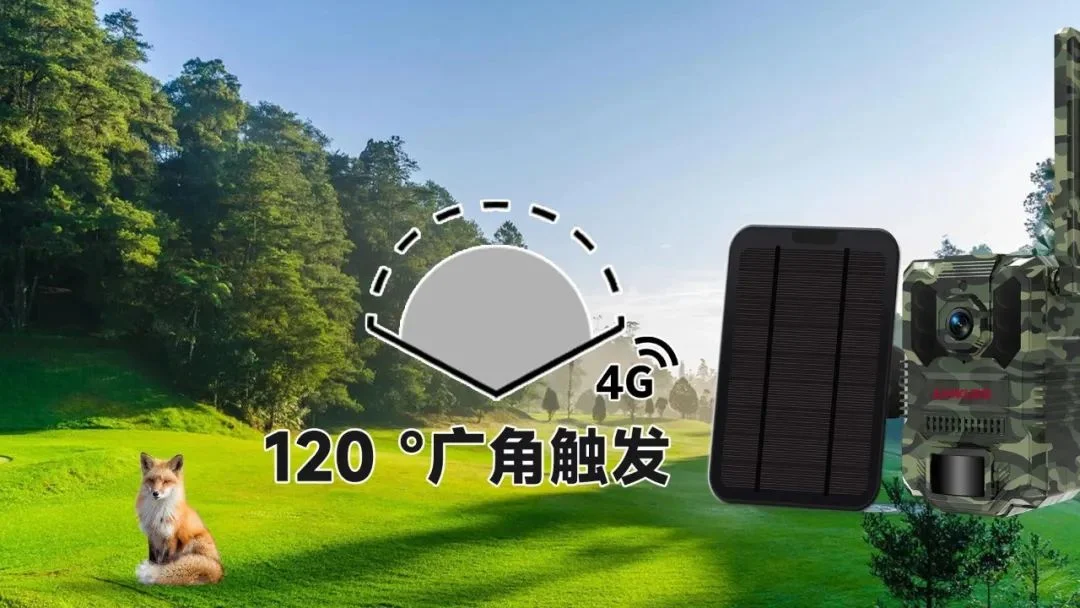
The first is hunting cameras , primarily marketed in North America. Hunting is a legal and traditional lifestyle in North America, and the advent of hunting cameras can help hunters predict the time, location, and species of animals, greatly improving efficiency. Hunting cameras are understood to be concealed, low power, high-resolution, and long -lasting . Currently, a 4G variant is available, suitable for long-term wildlife monitoring, and can be equipped with solar panels for even longer battery life.
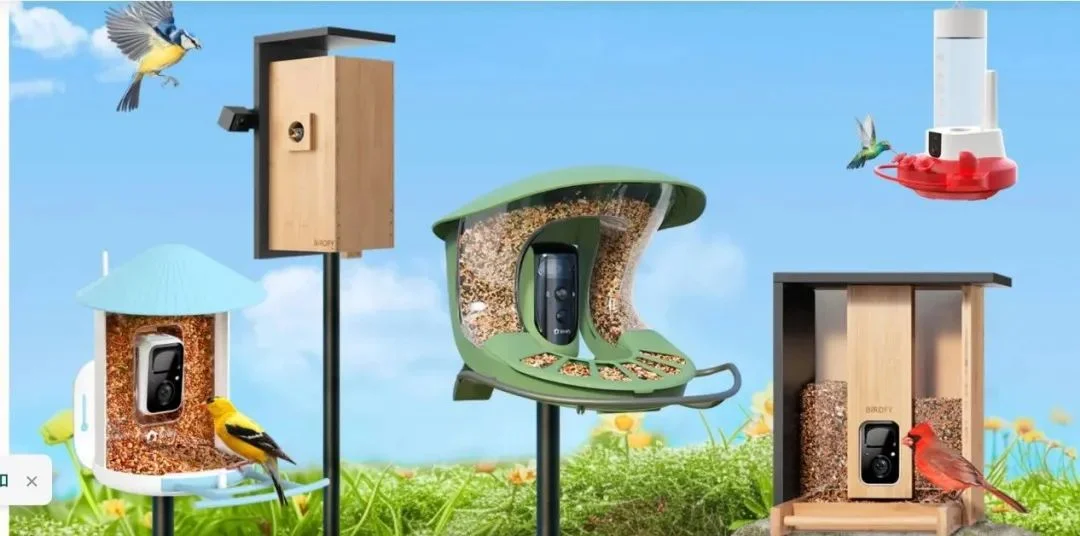
Next up is birdwatching cameras . Publicly available data suggests this category's market is primarily focused on North America, where bird feeding is a mainstream leisure activity. Therefore, considering the development history of this sector, current birdwatching cameras are a smart upgrade to traditional bird feeders and are a standard feature in North American households. Their components can be simply understood as a combination of bird feeder + camera + AI bird identification + remote playback + content sharing.
The third category is all-in-one solar cameras . This category began to gain popularity in the North American market around 2022 and quickly became a key outdoor security camera category within just two years. This growth was primarily driven by two factors: the widespread adoption of battery-powered cameras and North America's abundant and stable sunshine conditions.
Moreover, current terminal demands place more emphasis on convenience, especially for non-electrical environments such as villas, yard corners, and back alleys. A camera that is beautiful and easy to install is the user's only choice.
Finally, there's the window camera . Window cameras became popular around 24 years ago, primarily because European and American communities were limited to installing them on exterior walls. Consequently, the market urgently needed a camera that could easily adapt to front doors, backyards, and even birdwatching scenarios.
The emergence of window cameras solves this problem. However, current market feedback indicates that the biggest pain point of this product is the power supply wiring. During installation, users still need to stretch and organize the cables, significantly impacting both aesthetics and convenience. Therefore, the next clear direction for this category is battery-powered cameras, achieving truly zero-barrier installation.
https://www.y-crystaled.net/inventory-of-some-of-the-best-selling-surveillance-camera-products.html
Comments (0)