








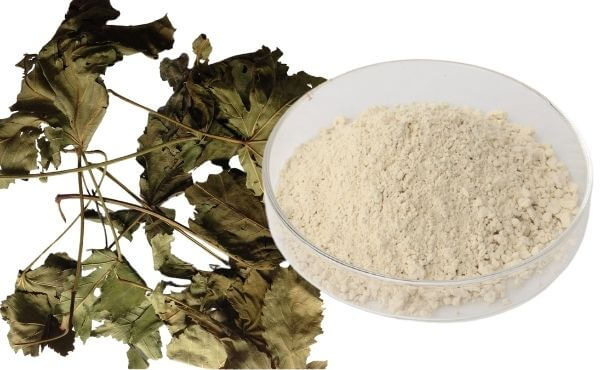
In the global search for natural alternatives to refined sugar and artificial sweeteners, one plant has quietly emerged as a standout candidate: Rubus suavissimus, commonly known as Chinese sweet tea. Native to the Guangxi province of China, this deciduous shrub has been consumed as a herbal tea for generations . But it is only recently that modern science has focused on its primary sweet component—rubusoside—a diterpene glycoside that offers high sweetness with minimal calories . For businesses in the food, beverage, and nutraceutical industries, sourcing high-purity rubusoside—particularly at the 90% HPLC standard—from specialized Chinese suppliers represents an opportunity to meet growing consumer demand for natural, functional sweeteners.
The Plant with Three Functions
Rubus suavissimus S. Lee holds a unique position in the botanical world. Researchers have described it as having three major functions: "tea, sugar, and medicine" . The leaves are rich in multiple bioactive components, including rubusoside, polyphenols, flavonoids, and polysaccharides . This combination of sweetness and bioactivity makes it far more than a simple sugar substitute.
The plant was formally identified in 1981 by Professor Li Shugang of the Guangxi Institute of Botany, though its traditional use predates this recognition by centuries . Today, it is cultivated primarily in the hills and slopes of southern China, where the climate and soil conditions produce leaves with optimal phytochemical profiles .
The Molecule: Rubusoside
Rubusoside is the principal sweet component in Rubus suavissimus leaves . Chemically, it is a steviol glycoside, structurally related to the compounds found in Stevia rebaudiana but with distinct sensory properties . It consists of a steviol aglycone with two glucose molecules attached, giving it a molecular formula of C32H50O18 and a molecular weight of approximately 642.7 g/mol.
What makes rubusoside particularly valuable is its dual nature. It provides the sweetness that makes it an ideal sugar substitute while simultaneously offering the bioactivity that positions it as a functional ingredient . This combination is rare in the natural sweetener landscape, where most alternatives offer sweetness alone.
The Science of Rubusoside: Beyond Sweetness
Metabolic Health and Lipid Regulation
Recent research has significantly expanded our understanding of rubusoside's therapeutic potential. A 2024 study investigated the effects of rubusoside on lipid metabolism disorders in both animal models and cell cultures . The results demonstrated that rubusoside supplementation reduced high-fat diet-induced weight gain, improved dyslipidemia, and slowed hepatic steatosis and adipose tissue expansion .
The mechanisms behind these effects are multi-faceted. Rubusoside was found to up-regulate the expression of peroxisome proliferator-activated receptors (PPARγ and PPARα)—key transcription factors involved in lipid metabolism—while down-regulating Lgals3 and Mknk2 expression . It also increased site-specific phosphorylation of PPARγ mediated by p38MAPK and ERK1/2 signaling pathways . These findings suggest that rubusoside alleviates lipid metabolism disorders through multiple pathways, positioning it as a promising ingredient for metabolic health formulations.
Blood Sugar Management
Another significant area of rubusoside research involves its effects on glucose metabolism. A 2025 study developed an environmentally friendly method for extracting polyphenols and rubusoside together from Rubus suavissimus leaves, then evaluated the resulting extract for hypoglycemic activity . Using affinity ultrafiltration and UPLC-MS/MS, researchers identified eight potential α-glucosidase inhibitors in the extract, including rubusoside itself .
α-Glucosidase is an enzyme responsible for breaking down complex carbohydrates into absorbable sugars. Inhibitors of this enzyme slow carbohydrate digestion and reduce postprandial blood glucose spikes—a key strategy in diabetes management. The enriched extract demonstrated enhanced bioactivity, with α-glucosidase inhibition increasing 3.35-fold after purification . This positions rubusoside-enriched extracts as valuable ingredients for functional foods targeting glycemic control.
Antioxidant Properties
The same 2025 study also evaluated the antioxidant capacity of purified Rubus suavissimus extracts. After purification, the IC50 values for DPPH radical scavenging decreased from 142.03 μg/mL to 88.45 μg/mL, while ABTS+ radical scavenging improved from 197.63 μg/mL to 107.63 μg/mL . These results confirm that rubusoside-rich extracts offer meaningful antioxidant protection, adding another dimension to their functional profile.
Anti-Inflammatory and Anti-Allergic Effects
Broader research on Rubus suavissimus extracts has demonstrated anti-inflammatory and anti-allergic properties . The polyphenols present alongside rubusoside contribute to these effects, creating a synergistic complex that addresses multiple aspects of the inflammatory response. Regular consumption of Chinese sweet tea has been traditionally associated with prevention and management of conditions including diabetes, coronary heart disease, arthritis, hypertension, and hyperlipidemia .
The 90% HPLC Standard: Why Purity Matters
For commercial applications, the purity of rubusoside extract is critical. The 90% HPLC standard represents a high-purity grade suitable for formulation into finished products. This level of purity ensures:
-
Consistent sweetness intensity for predictable formulation outcomes
-
Removal of plant fibers and pigments that could affect product appearance
-
Minimization of bitter or off-notes sometimes associated with crude extracts
-
Reliable dosing for functional applications where rubusoside is the active ingredient
Achieving 90% purity requires sophisticated extraction and purification technology. The process typically begins with water or ethanol extraction of dried Rubus suavissimus leaves, followed by chromatographic separation and crystallization . Recent research has optimized these parameters, with studies demonstrating that ADS-7 macroporous resin offers superior static adsorption and desorption capacities for rubusoside purification . Under optimized conditions—loading flow rate of 3 BV/h, loading concentration of 10 mg/mL, and elution with 80% ethanol—rubusoside content can be increased by 2.32 times .
The Supplier Advantage: Why China
China's leadership in rubusoside production rests on three pillars: native raw material, extraction expertise, and quality control capabilities.
1. Abundant and Authentic Raw Material
Rubus suavissimus is native to China, with its primary growing regions in Guangxi Province . This geographic specificity means that Chinese suppliers have direct access to the highest-quality starting material. The plant's adaptation to local conditions ensures optimal rubusoside content in the leaves, typically harvested at peak maturity to maximize yield.
2. Advanced Extraction Technology
Producing 90% rubusoside requires sophisticated manufacturing capabilities. Chinese suppliers have invested in the chromatographic equipment and purification trains necessary to achieve this purity level at commercial scale. Research continues to refine these processes, with recent studies exploring biotransformation and biosynthesis approaches that could further improve efficiency .
3. Quality Control and Testing
The "HPLC" designation in the product specification is not merely technical jargon—it represents a commitment to verified quality. High-performance liquid chromatography is the gold standard for quantifying rubusoside content . Reputable Chinese suppliers provide Certificates of Analysis documenting purity, along with residual solvent testing, heavy metal analysis, and microbiological specifications. UPLC-MS methods have been developed that offer excellent linear calibration (correlation coefficient of 0.9993) and recovery rates (95.3%-97.7%) for rubusoside determination .
Navigating Quality: A Buyer's Checklist
For companies seeking to source 90% rubusoside from Chinese suppliers, due diligence should focus on several key areas:
1. Purity Verification
Request HPLC analysis confirming rubusoside content of ≥90%. The analysis should clearly distinguish rubusoside from related steviol glycosides and provide a chromatogram showing peak purity .
2. Source Traceability
Ensure the supplier can document that the extract is derived from Rubus suavissimus leaves, not from biotransformation of stevioside or other sources. While both approaches yield rubusoside, traditional extraction from the native plant aligns with "natural" positioning for many brands.
3. Residual Solvent Testing
Depending on the extraction method, residual solvent analysis is essential. Reputable suppliers provide documentation confirming compliance with international pharmacopeial limits.
4. Stability Data
Rubusoside should be stored under appropriate conditions—typically cool, dry, and protected from light. Request stability studies demonstrating that the compound maintains its purity under recommended storage conditions throughout its shelf life.
5. Application-Specific Grades
Different applications require different specifications. Food and beverage applications may have different requirements than nutraceutical or cosmetic uses. Ensure your supplier can provide the appropriate grade for your intended market.
Market Context: The Natural Sweetener Revolution
The global market for natural sweeteners continues to expand, driven by consumer concerns about sugar consumption and artificial additives. Rubusoside occupies a unique position in this landscape. Unlike isolated steviol glycosides, which can have bitter aftertastes, rubusoside offers a cleaner sweetness profile . Research on glucosylated rubusosides has demonstrated that enzymatic modification can further improve the quality of taste and sweetness, opening possibilities for next-generation ingredients .
Beyond its sweetening properties, rubusoside's documented bioactivities—lipid regulation, blood sugar management, antioxidant effects—position it as a functional ingredient, not merely a sugar replacement. This dual functionality aligns perfectly with the growing demand for foods and supplements that deliver multiple benefits.
Final Thoughts
Rubusoside represents the best of modern botanical ingredient development: a traditional plant validated by contemporary science, with mechanisms of action elucidated at the molecular level. For businesses seeking to enter the natural sweetener or metabolic health markets, 90% HPLC rubusoside offers clinically relevant bioactivity backed by rigorous research.
China's suppliers bring unmatched advantages: native raw material access, sophisticated extraction technology, and quality control capabilities aligned with global standards. By partnering with a reputable Chinese manufacturer who prioritizes purity, transparency, and quality control, you can harness the full potential of this remarkable molecule. In doing so, you offer your customers not just a sweetener, but a connection to one of traditional medicine's most valuable gifts, delivered with the consistency that only modern science can provide.
Comments (0)