









In recent years, ultrasonic technology has gained widespread attention in multiple industries due to its efficiency, precision, and versatility. Among its many applications, the Shanghai Zhenxin Ultrasonic Extractor has become an indispensable tool in laboratories, research institutes, and industrial production facilities. This advanced equipment utilizes the power of ultrasonic waves to enhance extraction processes, providing an effective solution for separating bioactive compounds, breaking down cell structures, and enabling efficient emulsification.
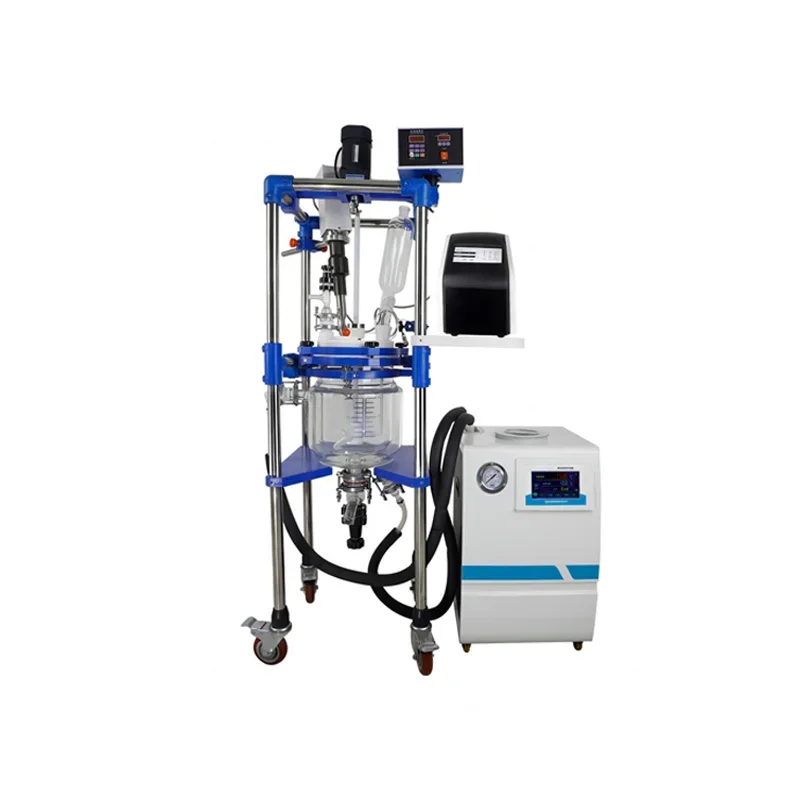
What is an Ultrasonic Extractor
An Ultrasonic Extractor is a device that uses high-frequency ultrasound waves to produce cavitation effects within a liquid medium. Cavitation refers to the rapid formation, growth, and collapse of microbubbles under ultrasonic vibration. When these bubbles collapse, they generate strong shockwaves, localized heating, and micro-jets, which cause:
Cell disruption: Breaking open cell walls and membranes to release intracellular substances.
Particle size reduction: Crushing solid particles into finer forms.
Enhanced mass transfer: Improving mixing and solubility between solid and liquid phases.
Efficient emulsification: Dispersing immiscible liquids into stable emulsions.
By combining ultrasound with controlled temperature regulation, stirring, and optional reactants, the ultrasonic extraction machine achieves high extraction yields with reduced solvent consumption and shorter processing times.
Working Principle of Ultrasonic Extractors
The effectiveness of an Ultrasonic Extractor lies in its acoustic cavitation mechanism:
-
Ultrasonic Waves Applied: A transducer generates ultrasound (typically 20–40 kHz) and transmits it into the liquid medium.
-
Cavitation Bubbles Form: Rapid vibration creates vacuum microbubbles that continuously expand and collapse.
-
Localized Energy Release: The collapse of these bubbles produces high shear forces, localized hotspots (up to thousands of °C), and high pressure zones.
-
Cell and Structure Disruption: These extreme conditions break down cellular walls and membranes, releasing target compounds such as alkaloids, polysaccharides, proteins, lipids, and essential oils.
-
Improved Solvent Penetration: Ultrasonics enhance the interaction between solvent and solid matter, significantly boosting extraction efficiency.
This working principle enables ultrasonic extractors to handle complex biological materials with precision, efficiency, and minimal thermal degradation.
Key Advantages of Ultrasonic Extractors
Compared with traditional extraction methods (such as maceration, Soxhlet extraction, or reflux extraction), ultrasonic extractors offer several advantages:
-
High Efficiency: Faster extraction time and higher yield of active compounds.
-
Energy-Saving: Lower power consumption compared to conventional heating methods.
-
Environmentally Friendly: Reduced need for chemical solvents, promoting green chemistry practices.
-
Temperature Control: Gentle extraction without damaging heat-sensitive compounds.
-
Versatility: Capable of handling a wide range of materials, from plant cells to microbial cultures.
-
Scalability: Suitable for laboratory-scale research as well as large-scale industrial production.
Applications of Ultrasonic Extractors
The Ultrasonic Extractor has broad applications in both academic and industrial fields:
1. Biochemistry and Microbiology
Extraction of proteins, enzymes, nucleic acids, and polysaccharides.
Cell lysis and homogenization for downstream analysis.
Preparation of microbial and animal cell suspensions.
2. Medicinal Chemistry and Pharmacy
Extraction of bioactive compounds from medicinal plants.
Preparation of pharmaceutical intermediates.
Development of natural medicines, essential oils, and nutraceuticals.
3. Food and Agriculture
Extraction of natural flavors, pigments, and antioxidants from agricultural products.
Production of functional foods and dietary supplements.
Isolation of active compounds for crop protection and veterinary medicine.
4. Surface Chemistry and Physics
Emulsification and dispersion of nanoparticles.
Preparation of stable suspensions and colloidal systems.
Surface treatment and cleaning of materials.
5. Zoology and Life Sciences
Extraction of hormones, proteins, and metabolites from animal tissues.
Cell disruption for genetic and proteomic studies.
Ultrasonic Extractors in Teaching and Research
Universities and research institutes frequently adopt ultrasonic extractors as standard laboratory equipment. Their modular design allows flexibility to adapt to different research goals, whether for fundamental studies of cell biology or applied pharmaceutical research. Researchers benefit from:
Simple operation and user-friendly controls.
Adjustable parameters for frequency, power, and temperature.
Compatibility with a wide range of solvents and sample types.
This versatility makes ultrasonic extractors ideal teaching tools for students and researchers exploring biochemical and chemical processes.
Industrial Applications and Customization
In addition to laboratory settings, ultrasonic extractors are increasingly used in industrial-scale production. Manufacturers value their scalability and ability to handle bulk processing efficiently. Modern ultrasonic extraction machines can be customized with:
Single-layer, double-layer, or triple-layer designs for different process needs.
Temperature control and automated stirring systems for optimized reactions.
Specialized reactors tailored to the viscosity and composition of different raw materials.
These features make ultrasonic extractors a future-ready technology for industries focused on sustainable and high-performance production.
Conclusion
The Shanghai Zhenxin Ultrasonic Extractor is a groundbreaking tool that combines physics, chemistry, and engineering to deliver efficient, eco-friendly, and versatile extraction solutions. By leveraging the principle of ultrasonic cavitation, this technology enables researchers and manufacturers to achieve higher yields, shorter processing times, and better preservation of active compounds.
From biochemistry and microbiology to food, agriculture, and pharmaceutical industries, ultrasonic extractors are redefining extraction methods and paving the way for greener and more efficient production systems.
As industries continue to embrace automation and sustainability, the role of ultrasonic extractors will only grow, making them an essential part of modern research and production.
https://www.zinscien.com/explore-the-working-principle-and-application-of-ultrasonic-extractors.html
Comments (0)