








High-temperature dispensing is one of the most demanding processes in electronics assembly, semiconductor packaging, precision bonding, and industrial adhesive application. As adhesives, sealants, and functional fluids continue to evolve toward higher viscosity, higher reactivity, and higher curing temperatures, the need for stable and reliable dispensing tools has become increasingly critical. Among them, the Temperature Resistant Syringe has emerged as a core component for accurate, safe, and contamination-free fluid delivery.
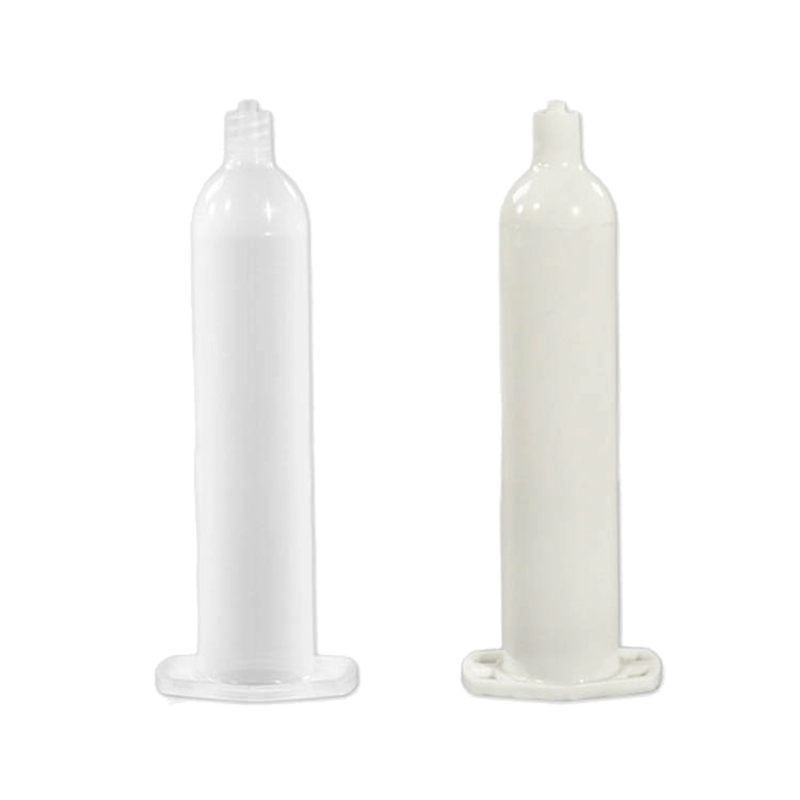
Contriu, as a supplier specializing in high-performance industrial dispensing solutions, offers advanced syringe barrels engineered for high-temperature environments, including 145°C-resistant and 180°C-resistant 30cc syringe barrel models, providing stable performance where conventional syringes fail.
1. Why High-Temperature-Resistant Syringes Matter in Modern Industry
Industrial dispensing processes increasingly involve:
Heat-activated adhesives
Thermal curing glues
High-viscosity materials requiring preheating
Solvent-sensitive chemistry that requires isolated environments
However, traditional plastic syringes deform, burst, or chemically react when exposed to elevated temperatures. These failures lead to:
Unstable dispensing volumes
Glue contamination
Barrel leakage or rupture
Air entrainment leading to inconsistent dot sizes
Higher machine downtime
To overcome these weaknesses, Contriu developed a new class of temperature-resistant syringes capable of enabling stable operation even under extreme thermal conditions.
2. Engineering Materials Make a Difference: Imported Temperature-Resistant PP
At the core of a temperature-resistant syringe is the barrel material. Contriu uses imported temperature-resistant polypropylene (PP) engineered for:
✔ Thermal Stability
Does not deform at 145°C or 180°C
Maintains dimensional accuracy under continuous exposure
Prevents tube expansion that affects plunger movement
✔ Mechanical Strength
High-temperature PP maintains its tensile strength and wall rigidity, preventing bursting under internal pressure during hot-fluid dispensing.
✔ Chemical Compatibility
Resistant to:
Epoxy adhesives
UV and thermal-cure glues
Solvents
Silicones and modified acrylates
✔ Zero Ion Contamination
Essential for electronics applications where ion migration can cause short circuits.
This material foundation ensures precise and consistent dispensing in demanding manufacturing lines.
3. Patented Piston Technology: Air Isolation for Glue Integrity
Temperature-resistant syringes face another challenge: air exposure.
Air leads to:
Premature curing
Moisture absorption
Increased viscosity
Bubble formation affecting dot size consistency
Contriu’s temperature-resistant syringes use a patented piston structure designed to:
✔ Completely isolate glue from air during filling and storage
The inner piston seal prevents atmospheric moisture and oxygen from entering.
✔ Maintain consistent lubrication and sliding force
Even at elevated temperatures, piston friction remains stable.
✔ Prevent backflow and leakage
The piston maintains pressure balance, avoiding reverse flow in vertical dispensing setups.
4. High-Temperature Performance: 145°C and 180°C Syringe Barrels
Contriu offers two primary high-temperature-resistant syringe barrel grades:
(1) 145°C Resistant Syringe Barrel
Suitable for preheated fluids
Ideal for electronics packaging and SMT reflow-related dispensing
Stability across repeated heating cycles
(2) 180°C Resistant Syringe Barrel
Designed for extreme conditions
Suitable for high-temperature solder pastes, heat-cure adhesives, and specialty sealants
Maintains structural integrity during continuous thermal exposure
Both series are available in standard 30cc sizes, compatible with mainstream dispensers, adapters, and pressure-time controllers.
5. Structural Design & Functional Enhancements
Contriu optimizes syringe barrels for industrial reliability:
✔ Thickened barrel walls
To withstand internal pressure expansion.
✔ Precision-molded inner diameter
Ensures uniform contact surface with the piston, improving feed consistency.
✔ Transparent or semi-transparent options
Allowing visual inspection of glue level and bubble presence.
✔ Standardized interface
Compatible with:
Pneumatic dispensers
Robot-assisted dispensing systems
Manual dispensing setups
6. Application Scenarios: Where Temperature-Resistant Syringes Excel
These syringes are widely applied in:
-
Electronics Manufacturing
-
Die bonding
-
Underfill
-
LED encapsulation
-
Solder paste dispensing
-
Automotive & Aerospace
-
High-temperature sealing
-
Thermal insulation adhesives
-
Sensor assembly materials
-
Semiconductor Packaging
-
Thermal-curing adhesive injection
-
Encapsulation materials subject to heating
-
Precision Engineering
-
Glue dispensing during heating calibration
-
Chemical-resistant fluid handling
The reliability of Contriu’s temperature-resistant syringe helps manufacturers reduce defect rates, improve dispensing stability, and maintain strict process repeatability.
7. How to Select the Right Temperature-Resistant Syringe
When choosing a temperature-resistant syringe, consider:
1. Temperature Range
Match the syringe’s thermal rating (145°C or 180°C) with your application.
2. Chemical Compatibility
Confirm adhesive-to-PP interaction.
3. Transparency Needs
Whether visual monitoring is required.
4. Piston Type
Use air-isolating designs for moisture-sensitive adhesives.
5. Dispensing Method
Ensure dimensional compatibility with your dispensing equipment.
Conclusion
The Temperature Resistant Syringe has become an indispensable component in high-temperature adhesive dispensing and precision industrial processing. By combining imported temperature-resistant PP material, patented air-isolating piston technology, and strict dimensional control, Contriu delivers syringe solutions that ensure stability, safety, and consistency under harsh thermal conditions. Whether used in semiconductor packaging, electronics assembly, or precision bonding, these syringes provide the accuracy and durability manufacturers need to maintain high-quality production.
Comments (0)