









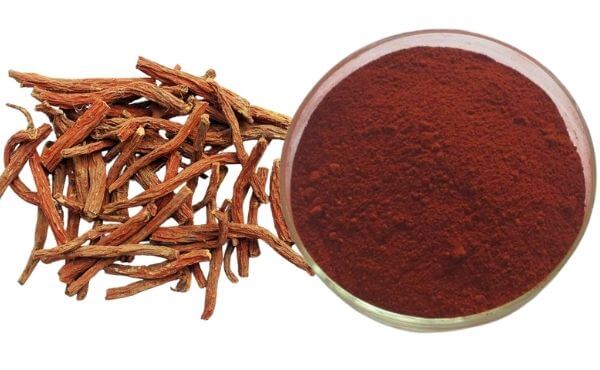
In the landscape of botanical extracts, certain molecules transcend their herbal origins to become subjects of intense pharmacological interest. Cryptotanshinone is one such compound. Isolated from the root of Salvia miltiorrhiza (Danshen), this lipophilic diterpene has emerged as a standout ingredient not just for traditional cardiovascular applications, but for a spectrum of bioactivities ranging from hepatoprotection to STAT3 inhibition. As research continues to validate its mechanisms at the molecular level, the demand for high-purity Cryptotanshinone has grown exponentially. For businesses seeking to formulate for liver health, inflammatory support, or cellular health, understanding this compound and the capabilities of Chinese suppliers is essential.
The Molecule with Multiple Mechanisms
Cryptotanshinone (chemical formula C19H20O3, molecular weight 296.36) is one of the major lipophilic constituents of Danshen root . Its distinctive structure places it among the diterpene quinones, a class known for potent bioactivity. While it shares its botanical source with Tanshinone IIA, Cryptotanshinone possesses a unique pharmacological profile that makes it valuable in its own right.
STAT3 Inhibition: A Key Mechanism
Perhaps the most significant discovery regarding Cryptotanshinone in recent years is its ability to inhibit Signal Transducer and Activator of Transcription 3 (STAT3). Research has demonstrated that Cryptotanshinone inhibits STAT3 with an IC50 value of 4.6 μM . STAT3 is a transcription factor involved in cellular proliferation, inflammation, and survival. By modulating this pathway, Cryptotanshinone opens doors for applications in cellular health and inflammatory response management.
Hepatoprotective Effects
The liver-protective properties of Cryptotanshinone have been extensively documented. A 2025 study investigated the hepatoprotective effects of Cryptotanshinone against acute liver injury induced by carbon tetrachloride in mouse models . The results were striking: treatment with Cryptotanshinone at 40 mg/kg significantly reduced levels of key liver enzymes including aspartate aminotransferase, alanine aminotransferase, and alkaline phosphatase. It also regulated oxidative stress indicators such as malonaldehyde, superoxide dismutase, glutathione, and catalase .
The research went further, employing network pharmacology and transcriptomics to identify the underlying mechanisms. Three key targets emerged: TNF-α, TLR9, and ADORA2B, along with the TLR, IL-17, and TNF signaling pathways . Cryptotanshinone significantly decreased the expression levels of these inflammatory mediators in liver tissue, suggesting its hepatoprotective effects are mediated through suppression of inflammation, oxidative stress, and apoptosis .
Additional research on ethanol-induced liver injury has shown that Cryptotanshinone activates the phosphorylation of AMP-activated protein kinase (AMPK), sirtuin 1 (SIRT1), and nuclear factor E2-related factor 2 (Nrf2) proteins . It significantly inhibits cytochrome P450 2E1 (CYP2E1) while enhancing antioxidant gene expression and hepatic glutathione levels. These multi-target effects make Cryptotanshinone a compelling candidate for liver health formulations.
Cardiovascular and Platelet Support
Long before its modern pharmacological characterization, Danshen was used in traditional medicine for circulatory health. Cryptotanshinone contributes significantly to these effects. Early research using GC-MS analysis demonstrated that Cryptotanshinone exhibits potent platelet anti-aggregating activity in vitro . By modulating platelet function, it supports healthy circulation and vascular integrity.
Bone Health Applications
Emerging research has also explored Cryptotanshinone's role in bone health. Studies on Danshen fractions containing tanshinones revealed that these compounds prevent osteoclast function in in vitro systems . Interestingly, the research noted a synergistic effect: the Danshen fraction completely inhibited osteoclastogenesis at concentrations where commercially available purified tanshinones required nearly 1000 times higher doses to achieve the same effect . This suggests that while Cryptotanshinone is a valuable marker compound, the full spectrum of Danshen constituents may offer enhanced bioactivity.
The Supplier Advantage: China's Expertise
China's leadership in Cryptotanshinone production rests on deep raw material knowledge, advanced extraction capabilities, and alignment with international quality standards.
1. Abundant and Authentic Raw Material
Salvia miltiorrhiza is native to China, and the country's growers possess generations of knowledge regarding optimal harvest timing. The roots and rhizomes are typically collected in spring or fall, when diterpene content peaks . Suppliers who control their supply chain from farm to factory can guarantee both authenticity and consistent starting material.
2. Advanced Extraction Capabilities
Producing high-purity Cryptotanshinone requires sophisticated technology. Recent research has established that extraction method and solvent selection significantly influence yield. A 2025 study comparing extraction techniques found that immersion extraction with 100% ethanol yielded the highest concentrations of Cryptotanshinone—up to 8.216% in optimized extracts . The same research confirmed that Cryptotanshinone demonstrates significant antioxidant effects in a dose-dependent manner, validating its role as a key bioactive compound in Danshen .
Leading Chinese manufacturers employ these evidence-based protocols at industrial scale. They utilize high-performance liquid chromatography (HPLC) to verify purity, typically offering Cryptotanshinone at ≥98% for nutraceutical and research applications . The crystalline powder requires careful handling—suppliers recommend storage at -20°C, protected from light and air, as prolonged exposure can degrade quality .
3. Regulatory Alignment
The United States Pharmacopeia (USP) has established clear standards for Danshen dry extract in its Herbal Medicines Compendium. The monograph specifies that the extract must contain not less than 90.0% and not more than 110.0% of the labeled amount of tanshinones, calculated as the sum of cryptotanshinone, tanshinone I, and tanshinone IIA . Chinese suppliers serving international markets are increasingly aligning their quality control with these global standards, providing Certificates of Analysis that document compliance.
Navigating Quality: A Buyer's Checklist
For companies seeking to source Cryptotanshinone from Chinese suppliers, due diligence should focus on several key areas:
1. Purity Verification
Request HPLC analysis confirming Cryptotanshinone purity. For most nutraceutical applications, ≥98% is the appropriate specification . The analysis should clearly distinguish Cryptotanshinone from related diterpenes like tanshinone IIA or isocryptotanshinone.
2. Source and Authenticity
Ensure the supplier specifies Salvia miltiorrhiza as the source material and can provide traceability information. The USP monograph warns about potential confounding materials such as Salvia bowleyana, so botanical identity matters .
3. Residual Solvent Testing
Given that optimal extraction often involves ethanol, residual solvent analysis is essential . Reputable suppliers provide documentation confirming compliance with international pharmacopeial limits.
4. Stability Data
Cryptotanshinone requires careful storage, typically at -20°C for long-term preservation . Suppliers should provide storage recommendations and stability studies demonstrating that the compound maintains purity under recommended conditions.
5. Application-Specific Grades
Different applications require different grades. Research-grade material (for laboratory use) and nutraceutical-grade material (for supplement formulations) may have different specifications. Ensure your supplier can provide the appropriate grade for your intended use.
Market Context: The Rise of Multi-Target Botanicals
The global market for liver health, cardiovascular support, and inflammatory management continues to expand. Cryptotanshinone occupies a unique position in this landscape. Unlike single-target synthetic compounds, it offers multi-modal protection: STAT3 inhibition, AMPK activation, antioxidant effects, and anti-inflammatory activity all within one molecule .
Recent research continues to uncover new therapeutic dimensions. The 2025 study confirming Cryptotanshinone's hepatoprotective mechanisms provides exactly the kind of mechanistic evidence that modern consumers and healthcare practitioners seek . Similarly, the 2025 optimization study establishing ideal extraction parameters gives manufacturers confidence in producing consistently potent material .
Final Thoughts
Cryptotanshinone represents the best of modern botanical medicine: an ancient herb validated by contemporary science, with mechanisms of action elucidated at the molecular level. For businesses seeking to enter the liver health, cardiovascular, or inflammatory support markets, this compound offers clinically relevant bioactivity backed by rigorous research.
China's suppliers bring unmatched advantages: deep raw material knowledge, sophisticated extraction technology, and a regulatory environment increasingly aligned with global standards. By partnering with a reputable Chinese manufacturer who prioritizes purity, transparency, and quality control, you can harness the full therapeutic potential of this remarkable molecule. In doing so, you offer your customers not just an ingredient, but a connection to one of traditional medicine's most valuable gifts, delivered with the consistency that only modern science can provide.
Comments (0)