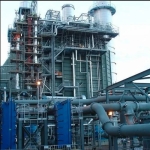
The **Captive Power Plant market** is gaining momentum as industrial and commercial consumers seek reliable electricity, greater control over energy costs, and reduced dependence on conventional grid supply.
The **Captive Power Plant market** is gaining momentum as industrial and commercial consumers seek reliable electricity, greater control over energy costs, and reduced dependence on conventional grid supply.
A recent market forecast estimates the global captive power plant market at **USD 37.57 billion in 2026**, with the potential to reach **USD 89.49 billion by 2033**, representing a CAGR of **13.2%** during the forecast period.
### ???? Key Growth Trends
• Rising industrial electricity consumption
• Growing demand for uninterrupted and reliable power
• Increasing adoption of gas-based and hybrid generation
• Expansion of renewable-energy-based captive plants
• Integration of battery energy storage systems
• Growing use of combined heat and power (CHP) technologies
• Increasing adoption of digital monitoring and energy-management systems
### ⚡ Renewable & Hybrid Captive Power
A major industry shift is the integration of **solar, wind, biomass and battery storage** with captive generation. Hybrid systems can help industrial users optimize energy costs, improve reliability and reduce dependence on fossil-fuel-based backup generation.
Energy storage is also becoming an important component, enabling peak-demand management, backup power and better utilization of excess renewable electricity.
### ???? Industrial Opportunity
Energy-intensive industries such as **metals, mining, cement, chemicals, manufacturing and petrochemicals** remain important users of captive generation because power reliability and energy costs can directly affect production economics.
India is also strengthening its captive-power framework. Electricity (Amendment) Rules, 2026 introduced changes intended to provide greater clarity and flexibility for captive generating plants while supporting industrial competitiveness and the transition toward non-fossil-fuel-based generation.
### ???? Opportunities Through 2033
The next phase of growth is expected to create opportunities across **renewable captive power, gas engines, CHP systems, solar-plus-storage, hybrid microgrids, EPC services, power-management technologies and energy-as-a-service models**.
Companies that can combine reliable onsite generation with renewable energy, storage and intelligent energy management may be well positioned as industrial consumers prioritize both **energy security and decarbonization**.
???? **Explore the Captive Power Plant Growth Trends & Opportunity Analysis 2033** for deeper insights into market dynamics, growth drivers, technology developments, application segments, competitive trends, investment opportunities and the future outlook of the captive power industry.
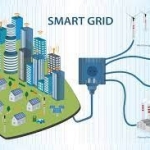
⚡ The **Demand Response Management System Market** is gaining importance as utilities and energy consumers seek smarter ways to balance electricity demand, improve grid flexibility, and optimize energy costs.
⚡ The **Demand Response Management System Market** is gaining importance as utilities and energy consumers seek smarter ways to balance electricity demand, improve grid flexibility, and optimize energy costs.
### ???? Key Market Drivers
• Growing adoption of smart grid technologies
• Rising electricity demand and peak-load management needs
• Increasing deployment of smart meters and connected devices
• Expansion of renewable and distributed energy resources
• Greater focus on grid stability and energy efficiency
• Growing adoption of automated demand response solutions
???? **Technology innovation** is reshaping the market through advanced analytics, artificial intelligence, IoT connectivity, cloud platforms, and automated load-management capabilities. These technologies enable utilities and consumers to respond more effectively to changing grid conditions.
???? **Opportunities through 2033** are emerging across utilities, commercial buildings, industrial facilities, residential energy management, microgrids, and renewable energy integration.
???? **Future Outlook:**
As electricity systems become increasingly decentralized, digital, and renewable-driven, demand response management systems are expected to play a critical role in balancing supply and demand while supporting a more flexible and resilient grid.
???? **Explore the Demand Response Management System Growth Analysis & Future Outlook 2033** to understand market trends, growth drivers, technology developments, emerging opportunities, and the evolving competitive landscape.
Introduction
The protective relay market serves as a critical backbone in the realm of power system protection, ensuring the safe and reliable operation of electricity distribution and transmiss...
Introduction
The current sensor market is a pivotal segment within the broader sensor industry, facilitating precise measurement and monitoring of electrical currents across diverse applications...
Introduction
As industries worldwide strive for greater energy efficiency and sustainability, waste heat recovery systems (WHRS) have emerged as a key technology to optimize energy usage and red...
Introduction
The transition to renewable energy sources is a global priority, with governments, businesses, and individuals increasingly focusing on reducing carbon emissions and ensuring energy...
Introduction
The current sensor market is an essential segment of the broader sensor industry, enabling accurate measurement and monitoring of electrical current in various applications. These s...