Israel’s solar energy sector is entering a new phase of expansion, driven by ambitious renewable-energy targets, strong solar resources, declining technology costs, and growing demand for energy storage. Solar PV already accounts for more than 90% of Israel’s renewable electricity generation, making it the backbone of the country’s clean-ene... morehttps://www.datamarketanalysis.com/reports/israel-solar-energy-market-size-forecast
☀️ **Israel Solar Energy Industry Trends & Competitive Analysis 2033**
Israel’s solar energy sector is entering a new phase of expansion, driven by ambitious renewable-energy targets, strong solar resources, declining technology costs, and growing demand for energy storage. Solar PV already accounts for more than 90% of Israel’s renewable electricity generation, making it the backbone of the country’s clean-energy transition.
???? **Key Industry Trends**
• Utility-scale solar continues to drive capacity additions
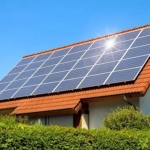
• Rooftop and distributed PV are expanding in urban and commercial areas
• Solar-plus-storage is becoming increasingly important for grid flexibility
• Agrivoltaics and other dual-use projects help address land constraints
• Digital energy management and smart-grid technologies are creating new opportunities
• Hybrid PV + battery systems are gaining momentum as solar penetration increases
???? **Growth Drivers**
Israel’s target of generating **30% of electricity from renewable sources by 2030** is supporting continued investment in solar infrastructure. Solar is expected to provide the overwhelming majority of this renewable generation, while storage expansion and grid modernization will be critical to integrating additional PV capacity.
Competitive dynamics are also evolving. Developers and energy companies are increasingly competing through large-scale project pipelines, storage integration, financing capabilities, PPAs, and innovative land-use solutions.
⚡ **Competitive Landscape**
The market features a mix of established Israeli renewable-energy developers, EPC companies, technology providers, and international participants. Companies such as **Enlight Renewable Energy, Doral, Nofar Energy, Shikun & Binui Renewable Energy, EDF Renewables, and SolarEdge Technologies** are among the notable participants shaping the industry.
???? **Opportunities Through 2033**
The next decade could unlock opportunities across solar modules, inverters, mounting systems, EPC services, battery storage, energy-management platforms, agrivoltaics, floating solar, distributed generation, and grid infrastructure.
However, land scarcity, transmission constraints, permitting, grid congestion, and geopolitical risks remain important challenges for market participants.
???? **Strategic Outlook to 2033**
Israel’s solar energy industry is positioned for sustained transformation as PV deployment increasingly moves toward **solar + storage + smart-grid integration**. Companies capable of combining project development expertise with innovative storage and grid solutions are likely to be well positioned for long-term growth.
???? **Explore the Israel Solar Energy Industry Trends & Competitive Analysis 2033** for deeper insights into market dynamics, technology trends, competitive positioning, growth opportunities, and strategic outlook.
Iran’s solar energy market is entering a high-potential growth phase as the country looks to expand renewable generation, strengthen energy security, and address rising electricity demand. The latest market outlook projects the Iran Solar Energy market to grow from **$116.8 million in 2026 to $234.9 million by 2033**, representing a **10.5% CAGR ... morehttps://www.datamarketanalysis.com/reports/iran-solar-energy-market-size-forecast
☀️ **Iran Solar Energy Strategic Insights & Forecast Outlook 2033**
Iran’s solar energy market is entering a high-potential growth phase as the country looks to expand renewable generation, strengthen energy security, and address rising electricity demand. The latest market outlook projects the Iran Solar Energy market to grow from **$116.8 million in 2026 to $234.9 million by 2033**, representing a **10.5% CAGR during 2026–2033**.
???? **Key Market Insights**
• Solar PV and CSP technologies are shaping the market landscape
• Utility-scale projects are creating significant deployment opportunities
• Commercial & industrial and residential applications are supporting distributed solar adoption
• On-grid and off-grid systems are expanding the addressable market
• Energy storage and hybrid integration are becoming increasingly important
• Solar deployment can support Iran’s power-sector diversification and reduce dependence on conventional generation
???? **Strategic Growth Drivers**
Iran has strong solar-resource potential, while government renewable-energy programs are encouraging additional capacity deployment. The country’s Seventh Development Plan targets **7,388 MW of renewable installed capacity by 2028**, providing an important policy framework for market expansion.
⚡ **Opportunities Ahead**
The next phase of Iran’s solar market could create opportunities across PV modules, inverters, mounting and tracking systems, balance-of-system components, electrical infrastructure, energy storage, hybrid systems, EPC services, and distributed generation.
At the same time, financing constraints, technology access, regulatory uncertainty, infrastructure requirements, and geopolitical factors remain important considerations for investors and industry participants.
The Iran Solar Energy market offers an evolving opportunity landscape for technology providers, project developers, investors, utilities, EPC companies, and renewable-energy stakeholders seeking long-term growth opportunities.
???? **Explore the full Iran Solar Energy Strategic Insights & Forecast Outlook 2033** for detailed market segmentation, competitive dynamics, regional analysis, growth drivers, opportunities, and forecasts.
Azerbaijan is accelerating its transition toward a more diversified and sustainable power system, with solar, wind, hydropower, and other renewable technologies gaining strategic importance.
Azerbaijan is accelerating its transition toward a more diversified and sustainable power system, with solar, wind, hydropower, and other renewable technologies gaining strategic importance.
The country has significant untapped renewable resources, particularly in **solar and wind**, while its renewable-energy framework provides a foundation for auctions, tenders, PPAs, and private-sector participation. Azerbaijan has set an ambition for renewable energy to account for **30% of electricity-generating capacity by 2030**, up from 16% in 2018.
### Key Growth Trends
???? Rapid development of utility-scale solar projects
???? Expansion of onshore and offshore wind opportunities
???? Modernization of transmission and distribution infrastructure
???? Increasing use of competitive auctions and renewable-energy PPAs
???? Growing focus on energy storage and grid flexibility
???? Development of green-energy export opportunities
???? Greater private-sector and international investment participation
### Solar & Wind: Core Growth Engines
Azerbaijan’s strong solar and wind resources create opportunities to reduce the power sector’s reliance on natural gas while preserving gas resources for exports and higher-value industrial applications. The IEA identifies renewable energy as an important pathway for improving energy diversification, reducing emissions, and strengthening electricity security.
The country’s renewable-energy legislation, adopted in 2021, established a legal framework for project development and introduced mechanisms including auctions and tenders.
### Green Energy & Regional Opportunities
Azerbaijan’s renewable expansion could extend beyond domestic electricity generation. Large-scale solar and wind projects, combined with transmission infrastructure and energy-storage technologies, can support regional electricity trade and emerging green-energy corridors.
The broader global renewable market also provides a favorable backdrop: the IEA expects renewable power capacity worldwide to expand by approximately **4,600 GW between 2025 and 2030**, with solar PV accounting for almost 80% of the increase.
### Opportunities Through 2033
Growth opportunities are emerging across **solar PV, wind power, hydropower, battery storage, transmission infrastructure, smart grids, EPC services, renewable-energy project development, operations & maintenance, and green-energy exports**.
For investors and technology providers, Azerbaijan offers an increasingly attractive platform for participating in the transformation of the Caspian region’s energy landscape.
???? **Azerbaijan Renewable Energy Growth Trends & Opportunity Analysis 2033** provides strategic insights into market drivers, technology trends, investment opportunities, competitive dynamics, challenges, and the long-term outlook for Azerbaijan’s renewable-energy sector.
Zimbabwe’s **renewable energy market** is entering a pivotal growth phase as the country seeks to address electricity shortages, strengthen energy security and expand access to reliable power.
Zimbabwe’s **renewable energy market** is entering a pivotal growth phase as the country seeks to address electricity shortages, strengthen energy security and expand access to reliable power.
According to DMA Intelligence, the Zimbabwe renewable energy market is estimated at **USD 215.0 million in 2026** and projected to reach approximately **USD 356.7 million by 2033**, representing a **7.5% CAGR from 2026 to 2033**.
### ???? Key Market Growth Drivers
• Rising electricity demand from mining, agriculture and industry
• Expansion of solar PV and distributed-generation systems
• Need to reduce dependence on electricity imports
• Increasing investment in rural electrification and mini-grids
• Government targets for renewable-energy capacity expansion
• Growing adoption of battery energy storage
• Increasing participation from private developers and development-finance institutions
Zimbabwe’s electricity demand is projected to rise substantially, with World Bank analysis estimating peak demand could increase from **1,950 MW in 2022 to 5,177 MW by 2030**. This creates a significant need for new generation capacity, particularly solar and other renewable technologies.
### ☀️ Solar Energy Creates Major Opportunities
Solar PV is emerging as one of Zimbabwe’s most attractive renewable-energy opportunities. Abundant solar resources, persistent power shortages and declining PV technology costs are encouraging investment in **utility-scale solar, commercial & industrial installations, rooftop systems and solar-plus-storage**.
The country’s National Energy Compact targets **2,640 MW of renewable generation by 2030**, representing 48.6% of projected generation capacity, while the share of renewables excluding large hydro is targeted to rise to 29%.
### ???? Off-Grid & Mini-Grid Expansion
Distributed renewable systems are particularly important for improving electricity access in underserved areas. In May 2026, Zimbabwe commissioned the **120 kW Dete Solar Mini-Grid**, providing clean electricity to households, schools and healthcare facilities while supporting the country’s universal-access ambitions.
This creates opportunities across **solar home systems, mini-grids, battery storage, smart inverters, energy-management systems and rural electrification services**.
### ???? Industrial & Mining Opportunities
Mining and other energy-intensive industries are increasingly exploring captive renewable generation to improve power reliability and reduce exposure to grid constraints. This is helping shift Zimbabwe’s solar market from primarily a backup-power solution toward a broader **infrastructure and investment opportunity**.
### ???? Outlook Through 2033
Zimbabwe’s renewable energy landscape is expected to become increasingly diversified, combining **solar PV, hydropower, bioenergy, distributed generation, mini-grids and energy storage**.
The biggest opportunities through 2033 will likely center on **utility-scale solar, captive power, rural electrification, renewable EPC services, battery storage, grid modernization and private-sector investment**.
???? **Explore the Zimbabwe Renewable Energy Market Expansion & Growth Analysis 2033** for deeper insights into market size, technology segments, end-user opportunities, grid connectivity, investment models, competitive dynamics, growth drivers and emerging opportunities.
New Zealand’s **solar energy market** is entering a stronger growth phase as utility-scale projects accelerate, rooftop adoption expands and the country looks to diversify its electricity generation mix.
New Zealand’s **solar energy market** is entering a stronger growth phase as utility-scale projects accelerate, rooftop adoption expands and the country looks to diversify its electricity generation mix.
Solar generation reached a **record 373 GWh in the March 2026 quarter**, up **50.2% year over year**, while new capacity additions helped push renewable electricity generation to 94.5% of total generation.
### ???? Key Growth Drivers
• Rapid development of utility-scale solar farms
• Rising residential and commercial rooftop adoption
• Government initiatives supporting solar deployment
• Growing electricity demand and energy-security priorities
• Increasing integration of battery energy storage
• Expansion of distributed-energy resources
• Opportunities to reduce dependence on fossil-fuel generation
Grid-connected solar is developing particularly quickly. Since 2023, **247 MW of grid-connected solar** had been installed by early 2026, with another **783 MW of new grid-connected solar** expected to come online in 2026/27—potentially taking total grid-connected capacity to approximately 1,031 MW.
### ???? Rooftop Solar Creates New Opportunities
Residential solar is also expanding. Installed residential solar capacity increased **29% during 2024, from 251 MW to 323 MW**.
Policy changes are supporting further adoption. The government expanded the permitted electricity-network voltage range and simplified building-consent requirements for rooftop solar, with modelling suggesting these measures could support an additional **507 GWh of solar generation** through increased connections.
### ⚡ Utility-Scale Solar & Storage
Large-scale solar is becoming an increasingly important source of new generation. Government analysis has identified substantial potential for additional utility-scale solar capacity, while project pipelines are expanding across multiple regions.
As solar penetration rises, **battery energy storage, smart inverters, grid management and flexible demand** will become increasingly important for balancing intermittent generation and maximizing the value of solar assets.
### ???? Emerging Investment Opportunities
Opportunities are developing across **utility-scale PV, rooftop solar, solar EPC, O&M, inverters, battery storage, energy-management systems, grid infrastructure and renewable-energy PPAs**.
The government is also examining streamlined procurement for solar installations across public-sector properties, potentially creating another avenue for project development and investment.
### ???? Outlook Through 2033
New Zealand’s solar industry is expected to become increasingly diversified, combining **utility-scale generation, distributed rooftop systems, battery storage and digital grid technologies**.
The key opportunity through 2033 will be converting the country’s strong solar resource and growing project pipeline into reliable, competitively priced electricity while maintaining grid stability.
???? **Explore the New Zealand Solar Energy Expansion Opportunities & Forecast Analysis 2033** for deeper insights into market dynamics, growth drivers, technology trends, project opportunities, competitive developments, regional prospects and the future outlook of New Zealand’s solar energy industry.
Introduction
As the world becomes increasingly dependent on electronic devices, the need for portable power solutions has never been more critical. Whether it's for outdoor enthusiasts, emergenc...
Introduction
The global shift toward renewable energy sources, driven by environmental concerns and the growing demand for sustainable energy solutions, has significantly increased the adoption ...
Introduction
The transition towards sustainable energy is at the forefront of global environmental agendas, and the Building-Integrated Photovoltaics (BIPV) market plays a pivotal role in this m...
Introduction
The solar inverter market is undergoing significant transformations as the global demand for renewable energy continues to rise. Solar inverters, which are vital components in photo...
Introduction
The solar tracker market is witnessing robust growth driven by a global push for renewable energy solutions and increasing adoption of solar power systems. As countries around the w...