Azerbaijan is accelerating its transition toward a more diversified and sustainable power system, with solar, wind, hydropower, and other renewable technologies gaining strategic importance.
Azerbaijan is accelerating its transition toward a more diversified and sustainable power system, with solar, wind, hydropower, and other renewable technologies gaining strategic importance.
The country has significant untapped renewable resources, particularly in **solar and wind**, while its renewable-energy framework provides a foundation for auctions, tenders, PPAs, and private-sector participation. Azerbaijan has set an ambition for renewable energy to account for **30% of electricity-generating capacity by 2030**, up from 16% in 2018.
### Key Growth Trends
???? Rapid development of utility-scale solar projects
???? Expansion of onshore and offshore wind opportunities
???? Modernization of transmission and distribution infrastructure
???? Increasing use of competitive auctions and renewable-energy PPAs
???? Growing focus on energy storage and grid flexibility
???? Development of green-energy export opportunities
???? Greater private-sector and international investment participation
### Solar & Wind: Core Growth Engines
Azerbaijan’s strong solar and wind resources create opportunities to reduce the power sector’s reliance on natural gas while preserving gas resources for exports and higher-value industrial applications. The IEA identifies renewable energy as an important pathway for improving energy diversification, reducing emissions, and strengthening electricity security.
The country’s renewable-energy legislation, adopted in 2021, established a legal framework for project development and introduced mechanisms including auctions and tenders.
### Green Energy & Regional Opportunities
Azerbaijan’s renewable expansion could extend beyond domestic electricity generation. Large-scale solar and wind projects, combined with transmission infrastructure and energy-storage technologies, can support regional electricity trade and emerging green-energy corridors.
The broader global renewable market also provides a favorable backdrop: the IEA expects renewable power capacity worldwide to expand by approximately **4,600 GW between 2025 and 2030**, with solar PV accounting for almost 80% of the increase.
### Opportunities Through 2033
Growth opportunities are emerging across **solar PV, wind power, hydropower, battery storage, transmission infrastructure, smart grids, EPC services, renewable-energy project development, operations & maintenance, and green-energy exports**.
For investors and technology providers, Azerbaijan offers an increasingly attractive platform for participating in the transformation of the Caspian region’s energy landscape.
???? **Azerbaijan Renewable Energy Growth Trends & Opportunity Analysis 2033** provides strategic insights into market drivers, technology trends, investment opportunities, competitive dynamics, challenges, and the long-term outlook for Azerbaijan’s renewable-energy sector.
Sudan’s power sector is entering a critical phase of recovery and transformation. Despite severe infrastructure damage and electricity-access challenges, the country presents significant opportunities for investment in generation, transmission, distribution, decentralized energy, and renewable power.
Sudan’s power sector is entering a critical phase of recovery and transformation. Despite severe infrastructure damage and electricity-access challenges, the country presents significant opportunities for investment in generation, transmission, distribution, decentralized energy, and renewable power.
The World Bank reported that Sudan had around **3.7 GW of installed generation capacity before the conflict**, while the sector already faced a generation deficit and low electricity access. More recently, damage to transmission infrastructure has disrupted major demand centers, highlighting the urgent need for resilient power infrastructure.
### Key Growth Drivers
???? Reconstruction and modernization of damaged power infrastructure
???? Expansion of electricity access in underserved rural areas
???? Rising demand for reliable power for households, agriculture, healthcare, and businesses
???? Development of solar-powered decentralized and off-grid systems
???? Grid expansion and transmission-network rehabilitation
???? Increasing private-sector participation in energy infrastructure
???? Long-term diversification toward renewable power generation
### Renewable Energy: A Major Opportunity
Sudan has substantial solar and wind resources that remain largely underutilized. Government planning has included major additions of solar PV, wind, hydropower, and other renewable capacity through 2035. The country's Renewable Energy Master Plan has also identified substantial additional generation capacity through 2033.
Solar is particularly attractive for decentralized applications. In 2026, UNDP highlighted opportunities for solar power to support households, farms, and small businesses while noting financing, customs, and quality-control challenges that need to be addressed.
### Investment Opportunities Through 2033
The market could create opportunities across **power generation, solar PV, hydropower, transmission and distribution, mini-grids, battery storage, diesel-solar hybrid systems, EPC services, smart-grid technologies, and operations & maintenance**.
The World Bank’s ASCENT-Sudan initiative is also targeting expanded electricity access and renewable-energy employment in several states, creating a pathway for private-sector participation and decentralized energy solutions.
???? **Sudan Power Expansion Opportunities & Forecast Analysis 2033** provides strategic insights into market drivers, infrastructure requirements, renewable-energy opportunities, investment potential, competitive dynamics, and the future outlook of Sudan’s power sector.
Introduction
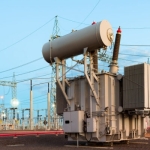
High voltage power transformers are the cornerstone of modern energy infrastructure. These large, heavy-duty devices are designed to step up or step down voltage in high-capacity po...
Introduction
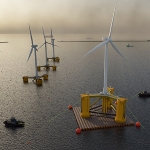
As the global transition toward renewable energy accelerates, the demand for innovative solutions to harness wind power continues to grow. Traditional offshore wind turbines, which ...