Denmark’s power market is undergoing a major transformation as renewable generation, electrification, grid modernization, energy storage, and Power-to-X reshape the country’s electricity system.
Denmark’s power market is undergoing a major transformation as renewable generation, electrification, grid modernization, energy storage, and Power-to-X reshape the country’s electricity system.
In 2025, **92.4% of Denmark’s net electricity generation came from renewable sources**, the highest share ever recorded in Denmark and the highest among EU member states.
???? **Key Power Market Trends**
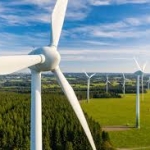
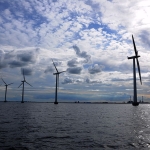
• Wind power remains a central pillar of Denmark’s electricity generation
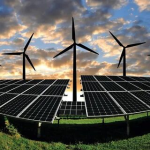
• Solar PV is expanding rapidly alongside offshore and onshore wind
• Electrification of transport, heating, industry, and other sectors is increasing power demand
• Data centers, Power-to-X projects, and battery storage are creating new electricity-load requirements
• Energy storage and demand response are becoming increasingly important for balancing variable renewable generation
• Cross-border interconnections are strengthening Denmark’s role in the regional Nordic and European power system
???? **Demand Growth & Grid Transformation**
Denmark’s electricity demand is expected to rise substantially as sectors such as transportation, heat pumps, hydrogen production, Power-to-X, and data centers become increasingly electrified. One industry projection indicates electricity consumption could increase from around **40 TWh in 2024 to nearly 200 TWh by 2050**, with Power-to-X representing a major contributor to future demand.
This growth is already putting pressure on the electricity network. In 2025, Energinet registered **8.2 GW of new electricity production and 20.2 GW of new electricity consumption** seeking transmission-grid connections—illustrating how quickly connection demand is expanding.
????️ **Grid Infrastructure: A Strategic Priority**
Grid capacity has become one of Denmark’s most important power-sector challenges. A 2026 government-backed assessment found that approximately **70% of Energinet’s grid projects were delayed**, potentially slowing connections for new wind and solar projects.
In response, Denmark announced an electricity-grid emergency plan designed to make better use of limited network capacity and prioritize critical electrification and renewable-energy projects.
???? **Emerging Opportunities Through 2033**
The evolving power market is creating opportunities across:
✅ Renewable power generation
✅ Offshore and onshore wind
✅ Solar PV
✅ Battery energy storage systems
✅ Smart-grid and digital-grid technologies
✅ Transmission and distribution infrastructure
✅ Demand-response solutions
✅ Power-to-X and green hydrogen
✅ Electrification infrastructure
✅ Grid-management and energy-flexibility platforms
???? **Strategic Outlook to 2033**
Denmark’s power market is shifting from a generation-expansion model toward a **high-renewables, highly electrified, flexible power system**. Future growth will depend not only on adding renewable capacity, but also on building sufficient grid infrastructure, storage, flexible demand, interconnection, and digital energy-management capabilities.
For utilities, renewable developers, grid operators, technology providers, EPC companies, investors, and energy-service providers, these developments create significant opportunities across the Danish power value chain.
???? **Explore the Denmark Power Market Trends & Industry Outlook 2033** for detailed insights into market dynamics, generation trends, infrastructure development, demand growth, competitive developments, investment opportunities, and the strategic outlook through 2033.
Denmark continues to strengthen its position as a global renewable-energy leader, with wind power, solar PV, energy storage, grid modernization, and Power-to-X technologies shaping the next phase of its energy transition.
Denmark continues to strengthen its position as a global renewable-energy leader, with wind power, solar PV, energy storage, grid modernization, and Power-to-X technologies shaping the next phase of its energy transition.
In 2025, **92.4% of Denmark’s net electricity generation came from renewable sources**, the highest share recorded in the country and the highest among EU member states.
???? **Key Market Trends**
• Offshore wind remains a cornerstone of Denmark’s renewable strategy
• Solar PV deployment is accelerating, reaching approximately **5.2 GW by March 2026**
• Onshore wind and solar are increasingly competitive, supporting faster capacity additions
• Battery storage, demand response, and flexible generation are becoming essential for grid balancing
• Power-to-X and green hydrogen can convert surplus renewable electricity into valuable fuels
• Energy islands and cross-border interconnections are opening new avenues for renewable power exports
???? **Growth Opportunities Through 2033**
Denmark’s ambition is to cover **100% of electricity demand with renewable energy by 2030**, supported by continued wind and solar expansion. A 2025 political agreement also provides for new tenders covering at least **3 GW of offshore wind**, with state support designed to reduce project revenue risk.
The **North Sea Energy Island** is another major strategic opportunity, with plans for at least **3 GW of offshore wind by 2033** and potential expansion to substantially higher capacity over the longer term.
⚡ **Emerging Investment Areas**
The market is creating opportunities across:
✅ Offshore and onshore wind
✅ Solar PV and distributed generation
✅ Battery energy storage systems
✅ Smart grids and grid-management technologies
✅ Green hydrogen and Power-to-X
✅ Energy islands and subsea infrastructure
✅ Renewable-energy EPC and O&M services
✅ Electrification and demand-side flexibility
???? **Strategic Challenges**
Rapid renewable deployment is also increasing pressure on Denmark’s electricity grid. Grid-capacity constraints can delay connections for approved wind and solar projects, making transmission expansion, storage, hybrid renewable plants, and flexible electricity consumption increasingly important.
???? **Strategic Outlook to 2033**
Denmark’s renewable-energy opportunity is evolving beyond simply adding generation capacity. The next stage will increasingly focus on **integrating wind and solar with storage, digital grids, electrification, hydrogen, and cross-border power infrastructure**.
For developers, technology providers, investors, utilities, EPC companies, and energy-system innovators, Denmark offers a strategically important market for next-generation renewable-energy solutions.
???? **Explore the Denmark Renewable Energy Growth Opportunities & Strategic Forecast 2033** for detailed insights into market trends, technology developments, growth drivers, investment opportunities, competitive dynamics, and the long-term renewable-energy outlook.
South Korea’s wind energy industry is gaining strategic importance as the country seeks to expand renewable generation, strengthen energy security, and advance its carbon-neutrality goals. With limited land availability and high population density, **offshore wind is emerging as a particularly important growth avenue**.
South Korea’s wind energy industry is gaining strategic importance as the country seeks to expand renewable generation, strengthen energy security, and advance its carbon-neutrality goals. With limited land availability and high population density, **offshore wind is emerging as a particularly important growth avenue**.
### Key Growth Trends
???? Rapid development of offshore wind projects
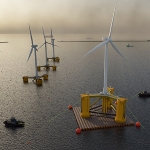
???? Expansion of fixed-bottom and floating offshore wind technologies
???? Government-led renewable-energy auctions and long-term contracts
???? Increasing investment in ports, transmission, and offshore infrastructure
???? Growing demand for domestic wind-turbine and component supply chains
???? Integration of wind power with battery storage and other flexibility solutions
???? Rising focus on local community participation and project acceptance
### Offshore Wind: A Major Opportunity
South Korea is strengthening its offshore-wind procurement framework. In the first half of 2025, the government announced around **1.25 GW of fixed-bottom offshore wind capacity** through its auction system, including approximately 500 MW allocated to a newly created public-led segment. The framework also places greater emphasis on supply-chain and energy-security considerations.
The country’s offshore wind opportunity is supported by its extensive coastline, while offshore development helps address the constraints created by limited land availability and competing land uses.
### Strategic Market Dynamics
South Korea’s wind-energy expansion will depend not only on project pipelines but also on **grid availability, permitting, financing, supply-chain capacity, technology costs, and community acceptance**. The IEA has emphasized the importance of early stakeholder engagement and stronger spatial planning to reduce delays and improve the development of renewable-energy infrastructure.
### Opportunities Through 2033
The market offers opportunities across **offshore wind development, turbine manufacturing, foundations, subsea cables, vessels, ports, EPC services, grid infrastructure, energy storage, digital monitoring, and operations & maintenance**.
For manufacturers, developers, investors, and technology providers, South Korea’s transition toward a larger renewable-energy system creates a long-term opportunity to participate in one of Asia’s emerging offshore-wind markets.
???? **South Korea Wind Energy Growth Opportunities & Strategic Forecast 2033** provides strategic insights into market drivers, technology trends, competitive dynamics, investment opportunities, challenges, and the long-term outlook for South Korea’s wind-energy industry.
Romania’s wind energy market is entering a new phase of expansion, supported by renewable-energy targets, investment incentives, grid modernization, and growing interest in offshore wind.
Romania’s wind energy market is entering a new phase of expansion, supported by renewable-energy targets, investment incentives, grid modernization, and growing interest in offshore wind.
With installed wind capacity projected at around **3.47 GW in 2025**, Romania is strengthening its position as an important renewable-energy market in Central and Eastern Europe. Government-backed Contracts for Difference (CfD) mechanisms are also improving revenue visibility for new renewable projects.
### Key Market Trends
???? Expansion of utility-scale onshore wind projects
???? Increasing investment in grid infrastructure and energy storage
???? Growing competition among renewable developers and technology providers
???? Rising interest in corporate PPAs and long-term renewable procurement
???? Emerging offshore wind opportunities in the Black Sea
???? Greater focus on local manufacturing, services, and renewable-energy supply chains
### Offshore Wind: A Major Long-Term Opportunity
Romania’s Black Sea offshore wind sector could become a significant growth engine. A World Bank roadmap identifies potential for **up to 7 GW of offshore wind capacity by 2035**, creating opportunities across project development, turbines, foundations, ports, installation, operations and maintenance, and supporting infrastructure.
### Competitive Landscape
Competition is expected to intensify as international renewable developers, turbine suppliers, EPC contractors, infrastructure companies, and local suppliers target Romania’s expanding project pipeline. The development of domestic supply-chain capabilities could further strengthen the country’s position in the regional wind-energy ecosystem.
### Opportunities Through 2033
The market presents opportunities across **wind farm development, turbine technology, EPC services, grid integration, energy storage, digital monitoring, O&M, component manufacturing, and offshore wind infrastructure**. Grid capacity and permitting remain important factors that could influence the pace of deployment.
???? **Romania Wind Energy – 2025–2033** offers strategic insights into market trends, competitive dynamics, growth drivers, challenges, and emerging investment opportunities.
The **United States High-Voltage Direct Current (HVDC) transmission systems market** is gaining strategic importance as the country confronts rising electricity demand, aging grid infrastructure, renewable-energy expansion and the need to move large volumes of power across long distances.
The **United States High-Voltage Direct Current (HVDC) transmission systems market** is gaining strategic importance as the country confronts rising electricity demand, aging grid infrastructure, renewable-energy expansion and the need to move large volumes of power across long distances.
HVDC remains a relatively small share of U.S. high-voltage transmission infrastructure, leaving substantial room for expansion. DOE notes that HVDC can efficiently transmit power over long distances and can connect the country’s three asynchronous interconnections without disrupting their frequencies.
### ???? Key Market Drivers
• Growing electricity demand from data centers and industrial loads
• Increasing renewable-energy generation in remote regions
• Need for long-distance, high-capacity transmission
• Aging transmission infrastructure and grid congestion
• Expansion of offshore wind transmission opportunities
• Growing interest in interregional and interconnection links
• Rising demand for grid resilience and flexibility
The DOE’s **2026 Draft National Transmission Needs Study** highlights pressing requirements for additional transmission infrastructure as data centers, domestic manufacturing and other large loads drive electricity demand.
### ⚡ HVDC Unlocks Long-Distance Power Transfer
HVDC can provide efficient bulk power transmission over long distances while offering controllable power flows. It is particularly valuable for connecting remote renewable resources to major demand centers and for transferring electricity between asynchronous grid regions.
Current U.S. HVDC deployment remains limited compared with the overall high-voltage network, suggesting significant long-term potential as transmission requirements expand.
### ???? Renewable Energy & Offshore Opportunities
Large-scale wind and solar resources are often located far from major load centers. HVDC can provide a strategic transmission pathway for these resources, while submarine HVDC systems can support offshore renewable-energy connections.
The DOE is also investing in technology development aimed at reducing HVDC costs, with the **HVDC CORE initiative targeting a 35% cost reduction by 2035**.
### ???? Interregional Grid Connections
One of the most significant opportunities is connecting the **Eastern, Western and Texas interconnections**. DOE analysis has identified substantial potential for HVDC expansion and increased transfer capacity between these currently asynchronous systems.
Projects such as the **Cimarron Link** and **Southern Spirit** illustrate how HVDC can connect regions, improve reliability and move electricity toward growing load centers.
### ???? Technology & Investment Opportunities
Growth opportunities extend across **HVDC cables, converter stations, VSC technology, transformers, switchgear and protection, control systems, digital monitoring, project engineering and grid-integration services**.
In March 2026, DOE’s ARPA-E announced up to **$35 million for 12 projects** focused on HVDC technologies designed to expand transmission capacity and reliability.
### ???? Outlook Through 2034
The U.S. HVDC market is positioned for increasing investment as the power system evolves toward **larger renewable generation fleets, greater electrification, data-center-driven demand and stronger interregional transmission networks**.
A recent industry forecast projects the **global HVDC transmission system market** to grow from **$12.6 billion in 2026 to $22.29 billion by 2034**, at a 7.39% CAGR; the U.S. represents an important North American opportunity within this broader expansion.
???? **Explore the United States High-voltage Direct Current (HVDC) Transmission Systems Market Opportunity by 2034 | In-Depth Report** for deeper insights into market dynamics, technology trends, transmission applications, regional opportunities, competitive developments, growth drivers and investment prospects.
Introduction
As the global economy pivots toward sustainability, the renewable energy market has emerged as a cornerstone of the transition to a cleaner, more resilient future. Driven by technol...
Introduction
As the world continues to shift towards renewable energy sources, the wind turbine industry is playing a central role in driving sustainable power generation. Wind energy, in partic...
Introduction
As the global transition toward renewable energy accelerates, the demand for innovative solutions to harness wind power continues to grow. Traditional offshore wind turbines, which ...
Introduction
Wind energy is one of the fastest-growing sources of renewable power globally, and as the world accelerates its efforts to transition to cleaner and more sustainable energy sources,...
Introduction
As the world seeks sustainable energy solutions, the ocean wind farm market is emerging as a critical player in the renewable energy landscape. With growing concerns about climate c...