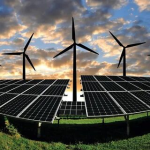
Romania’s wind energy market is entering a new phase of expansion, supported by renewable-energy targets, investment incentives, grid modernization, and growing interest in offshore wind.
Romania’s wind energy market is entering a new phase of expansion, supported by renewable-energy targets, investment incentives, grid modernization, and growing interest in offshore wind.
With installed wind capacity projected at around **3.47 GW in 2025**, Romania is strengthening its position as an important renewable-energy market in Central and Eastern Europe. Government-backed Contracts for Difference (CfD) mechanisms are also improving revenue visibility for new renewable projects.
### Key Market Trends
???? Expansion of utility-scale onshore wind projects
???? Increasing investment in grid infrastructure and energy storage
???? Growing competition among renewable developers and technology providers
???? Rising interest in corporate PPAs and long-term renewable procurement
???? Emerging offshore wind opportunities in the Black Sea
???? Greater focus on local manufacturing, services, and renewable-energy supply chains
### Offshore Wind: A Major Long-Term Opportunity
Romania’s Black Sea offshore wind sector could become a significant growth engine. A World Bank roadmap identifies potential for **up to 7 GW of offshore wind capacity by 2035**, creating opportunities across project development, turbines, foundations, ports, installation, operations and maintenance, and supporting infrastructure.
### Competitive Landscape
Competition is expected to intensify as international renewable developers, turbine suppliers, EPC contractors, infrastructure companies, and local suppliers target Romania’s expanding project pipeline. The development of domestic supply-chain capabilities could further strengthen the country’s position in the regional wind-energy ecosystem.
### Opportunities Through 2033
The market presents opportunities across **wind farm development, turbine technology, EPC services, grid integration, energy storage, digital monitoring, O&M, component manufacturing, and offshore wind infrastructure**. Grid capacity and permitting remain important factors that could influence the pace of deployment.
???? **Romania Wind Energy – 2025–2033** offers strategic insights into market trends, competitive dynamics, growth drivers, challenges, and emerging investment opportunities.
Ireland’s renewable energy sector is moving into a major growth phase, driven by ambitious climate targets, rising electricity demand, grid investment, and the rapid development of offshore wind.
Ireland’s renewable energy sector is moving into a major growth phase, driven by ambitious climate targets, rising electricity demand, grid investment, and the rapid development of offshore wind.
The country is targeting **up to 80% renewable electricity by 2030**, while its offshore renewable energy ambitions extend to **at least 37 GW by 2050**. These targets are creating significant opportunities across wind, solar PV, energy storage, grid infrastructure, green hydrogen and renewable-energy supply chains.
### ???? Key Growth Drivers
• Expansion of offshore and onshore wind capacity
• Rapid growth of solar PV generation
• Grid modernization and renewable integration
• Increasing demand for energy storage and flexibility
• Development of green hydrogen and biomethane
• Growing electricity demand from energy-intensive industries
• Government support for renewable-energy supply chains and investment
Ireland’s offshore wind opportunity is particularly significant. Government strategy targets at least **20 GW of offshore renewable energy by 2040**, rising to **37 GW by 2050**, creating a substantial long-term market for project development, engineering, manufacturing, ports, transmission and related services.
### ⚡ Emerging Market Opportunities
Ireland is increasingly connecting renewable generation with industrial development. The 2026 Large Energy User Action Plan promotes a plan-led approach to **Green Energy Parks**, where energy-intensive industries can be located alongside renewable generation and supporting infrastructure.
Energy storage, grid reinforcement, offshore wind supply chains, renewable power procurement, green hydrogen and smart energy systems are therefore expected to become increasingly important through 2033.
### ???? Future Outlook
The Ireland renewable energy market is positioned for sustained expansion as the country works to decarbonize electricity, strengthen energy security and unlock new industrial opportunities. Recent government initiatives also emphasize capturing greater economic value from the renewable-energy transition through domestic supply chains, innovation and regional development.
???? **Explore the Republic of Ireland Renewable Energy Growth Analysis & Future Outlook 2033** for deeper insights into market trends, growth drivers, investment opportunities, technology developments, competitive dynamics and the evolving renewable-energy landscape.
Australia's strong renewable energy potential and expanding clean-energy infrastructure are creating significant opportunities for the **wind energy industry**. With large-scale projects, grid development, and growing demand for low-carbon electricity, wind power is becoming an important component of Australia's evolving energy mix.
Australia's strong renewable energy potential and expanding clean-energy infrastructure are creating significant opportunities for the **wind energy industry**. With large-scale projects, grid development, and growing demand for low-carbon electricity, wind power is becoming an important component of Australia's evolving energy mix.
???? **Key Market Growth Drivers**
• Abundant wind resources across key regions
• Expansion of utility-scale wind farms
• Growing demand for renewable electricity
• Increasing investments in transmission and grid infrastructure
• Rising focus on energy transition and emissions reduction
???? **Emerging Opportunities**
Opportunities are expanding across onshore wind, offshore wind, turbine manufacturing and services, project development, operations and maintenance, and grid integration. Advances in turbine technology, digital monitoring, and hybrid renewable projects are also creating new avenues for industry growth.
???? **Revenue Outlook to 2033**
Australia's wind energy market is expected to evolve as renewable generation capacity expands and electricity systems become increasingly integrated with clean-energy technologies. Project investment, grid connectivity, policy developments, technology costs, and power demand will remain important factors influencing industry revenues through 2033.
???? **Explore the Australia Wind Energy Revenue Analysis & Industry Forecast 2033** to understand market dynamics, revenue opportunities, technology trends, regional developments, investment prospects, and the competitive landscape shaping Australia's wind energy industry.
Introduction
As the global economy pivots toward sustainability, the renewable energy market has emerged as a cornerstone of the transition to a cleaner, more resilient future. Driven by technol...